Steel Coil VCI Packaging: Route-Based Corrosion Control
The same coil can need different VCI packages on different routes. This guide shows how to write route-based VCI rules with controlled build-up, material traceability, and real validation evidence.
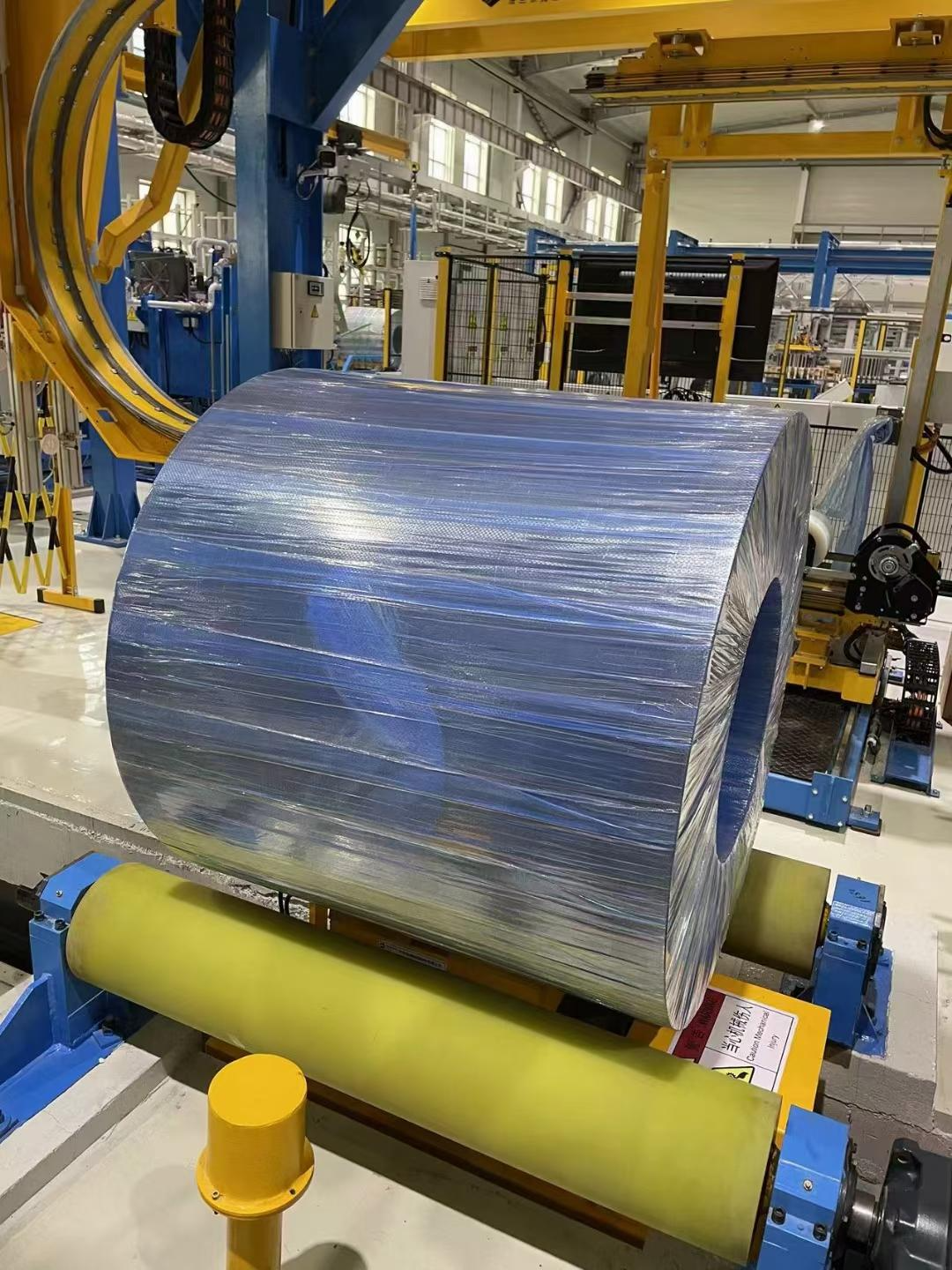
VCI Packaging for Steel Coils: Materials and Process Control
VCI Packaging for Steel Coils: Materials and Process Control
VCI is often mentioned as if it were a complete export solution by itself. That shortcut causes packaging mistakes. VCI can be an important part of moisture and corrosion protection for steel coils, but it only works inside a controlled package process. The material, the order of use, the surface condition, and the route assumptions all matter.
This guide helps packaging and quality teams treat VCI as part of a controlled process inside an automatic coil packing line rather than a single-product answer.
Define Why VCI Is Needed
Start by stating the risk the package is trying to manage. Is the concern indoor storage with variable humidity, long ocean transit, intermediate warehousing, or a customer rule that requires corrosion protection? VCI should be selected against the route and storage condition, not added automatically to every coil.
The route assumption should be visible in the packaging rule.
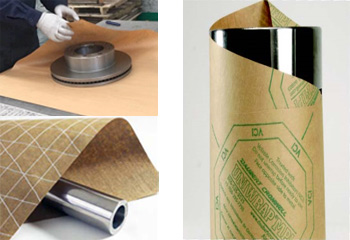
The image presents a system view of VCI packaging: material, starting condition, layer sequence, route, and validation are treated as one controlled process rather than a single-product decision.
Control the Starting Condition of the Coil
VCI does not replace basic preparation. The coil condition before packaging matters: surface cleanliness, dryness, and any hold time before the protective layers are applied. If the process allows an uncontrolled delay between preparation and wrapping, the package can fail even when the right material was selected.
That is why VCI should appear in the process map, not only in the bill of materials.
Specify the Package Build-Up
A VCI recipe should describe:
- Where the VCI material sits in the package
- Which other protection layers it works with
- What contact or spacing is intended
- How the edges, sides, and bore are protected
- How the outer package is closed and stabilized
VCI film, paper, or related materials may all be used in coil packaging, but the sequence and enclosure logic are what make the package meaningful.
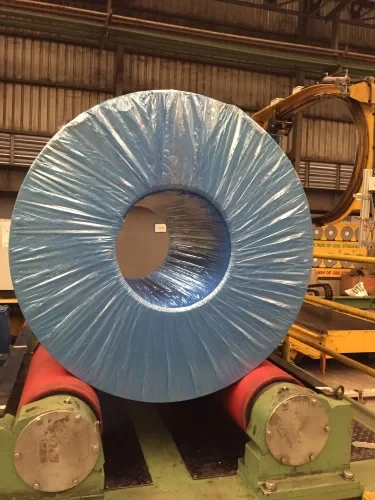
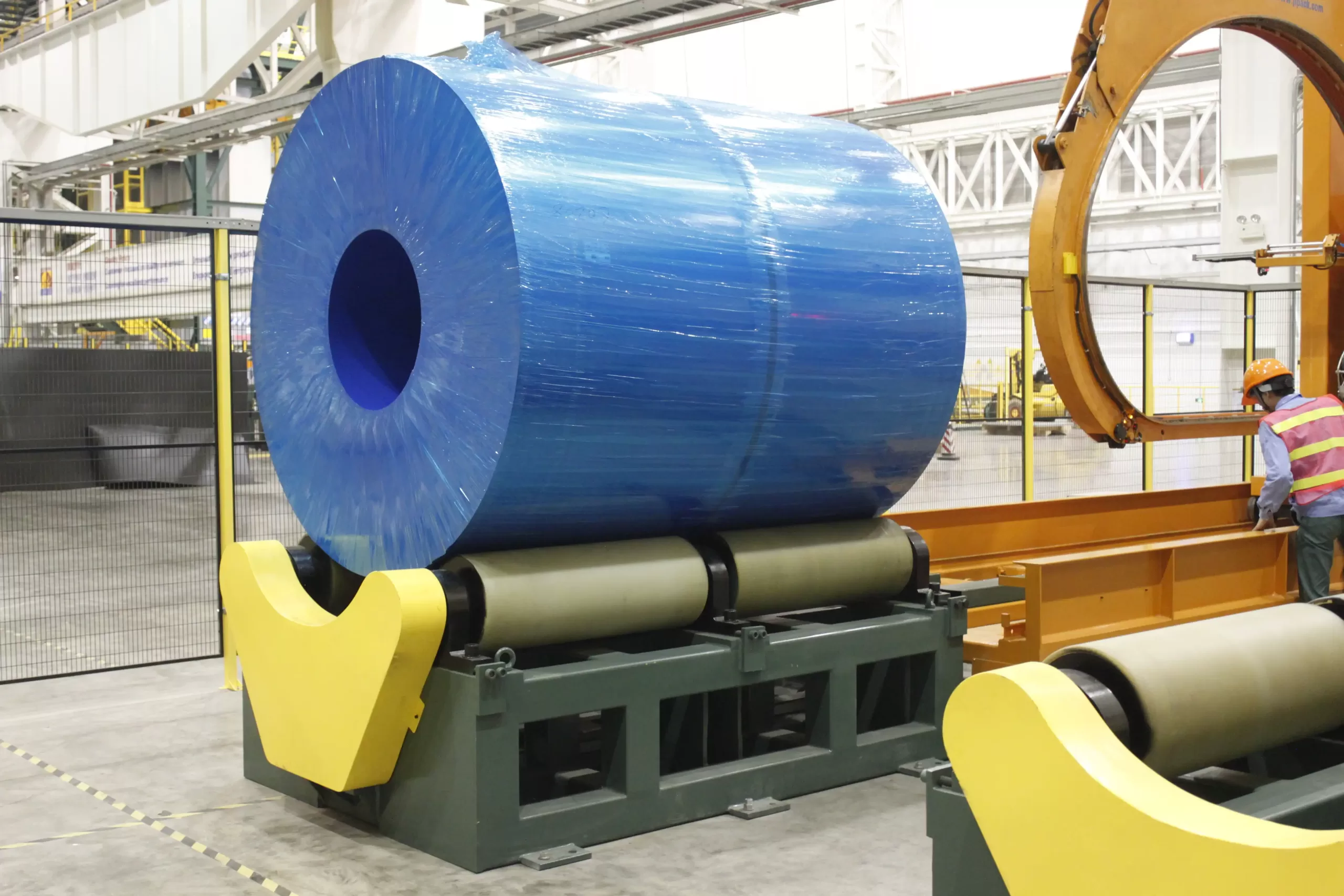
The image shows a VCI stretch film wrapped coil. The recipe must state where the VCI material sits, how the edges and sides are protected, and how the outer package is closed and stabilized.
Watch a coil VCI packing machine, big coil wrapper:

Match VCI to the Route, Not Only the Product
Two identical coils may need different corrosion-protection packages if one stays in a nearby warehouse and the other enters a longer export route. The specification should separate route categories and define which families need VCI and which do not.
Otherwise teams often add cost and complexity to low-risk routes while still under-specifying the more demanding ones.
| Route Category | VCI Rule | Outer Package | Validation Point |
|---|---|---|---|
| Short internal route | Define per plant rule | Confirm outer wrap | Post-handling check |
| Warehousing route | Define per plant rule | Confirm outer wrap | Inspection after storage where available |
| Export route | Define per plant rule | Confirm full build-up | Representative trial or route verification |
That route-based view also improves communication between packaging and logistics. The package rule becomes easier to audit when the intended storage and shipment conditions are written next to the selected VCI method.
Protect the Protective Layers
A VCI package still depends on stable wrapping, strap placement, and handling. If the outer structure shifts, tears, or exposes key areas during movement, the intended corrosion-protection envelope may not remain intact. That means VCI cannot be reviewed without the rest of the package.
Package control points should include the final condition after handling, not only the condition immediately after wrapping.
Distinguish Plant Practice from Published Claims
It is common to find broad claims about corrosion-protection performance in product literature. Those claims may be useful as inputs, but they do not replace a controlled plant process. The packaging team should record what is being adopted from a supplier note, what is being tested locally, and what remains route-dependent.
This distinction protects the article from overclaiming and protects the project from assuming that material language equals verified packaging performance.
Manage Material Change and Traceability
If a line uses more than one protection recipe, operators need clear rules for material selection, replenishment, and first-article confirmation. Record which recipe and material were used, who released the package, and how route-specific exceptions are handled.
Traceability matters because corrosion complaints often appear long after the coil has left the line.
It also helps the team separate a material issue from a process issue. Without traceability, the plant may repeat the same package on the next batch without knowing whether the earlier problem came from route exposure, starting condition, or recipe execution.
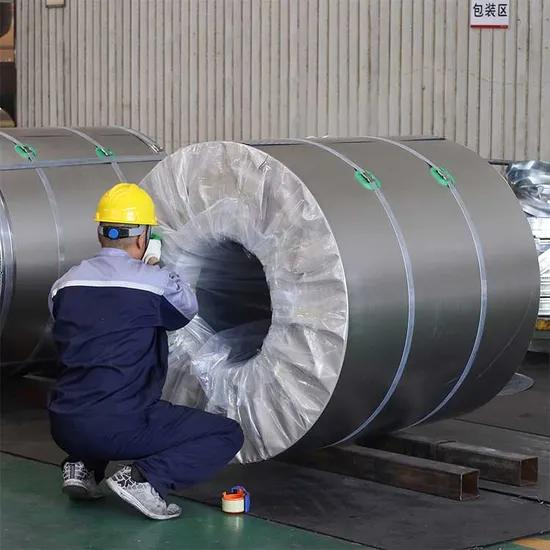
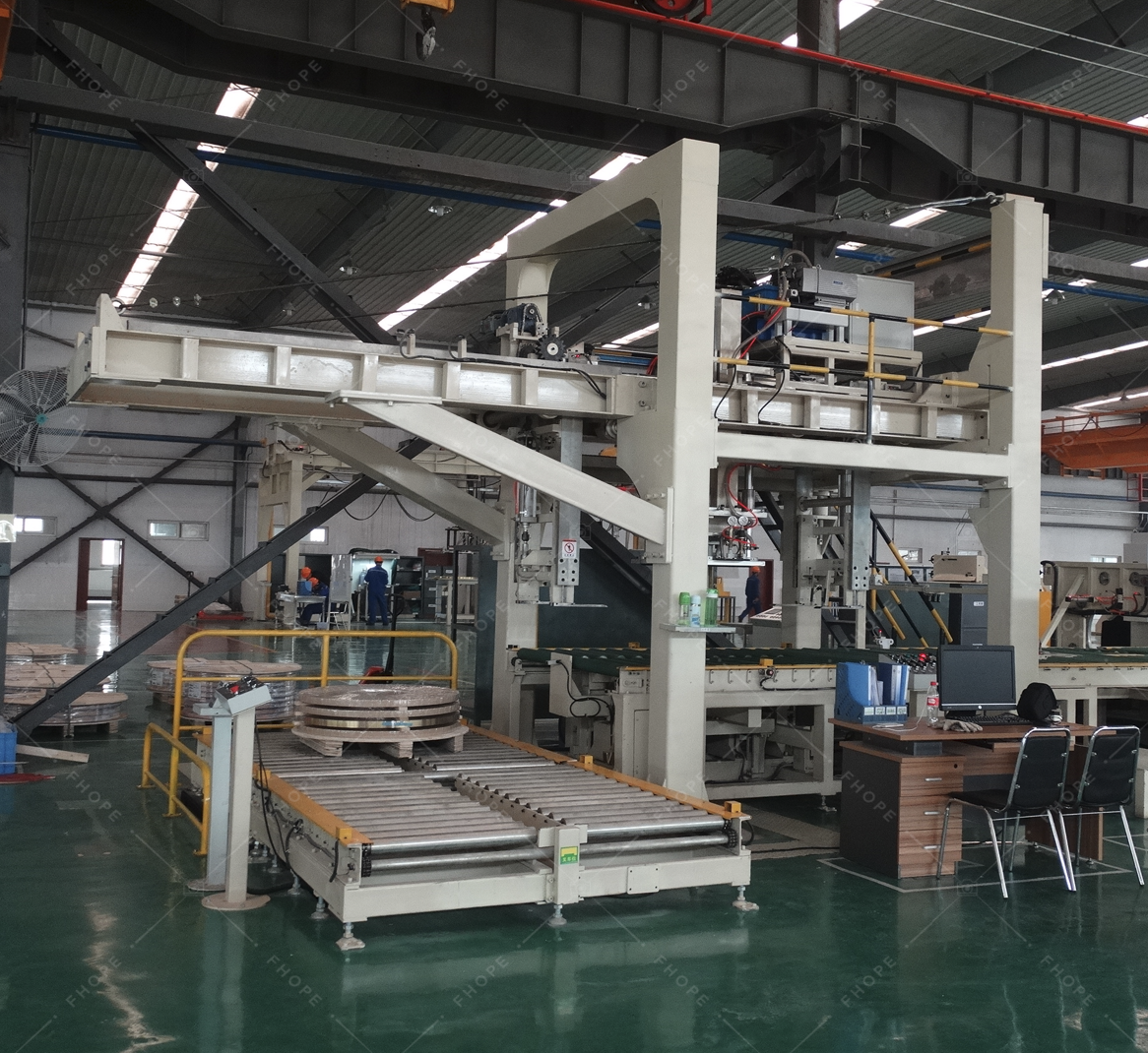
The image shows an automatic VCI film application station with an operator nearby. Material selection, replenishment, and first-article confirmation must follow a clear rule so the same recipe is used until it is deliberately changed.
Validate the Process, Not Only the Material
A supplier data sheet does not prove the plant process is controlled. Representative trials should reflect the actual package build-up, the actual route assumption, and the actual handling sequence. Inspection after storage, transit simulation, or route verification should feed back into the packaging rule.
Avoid converting one successful project or one supplier note into a universal VCI claim.
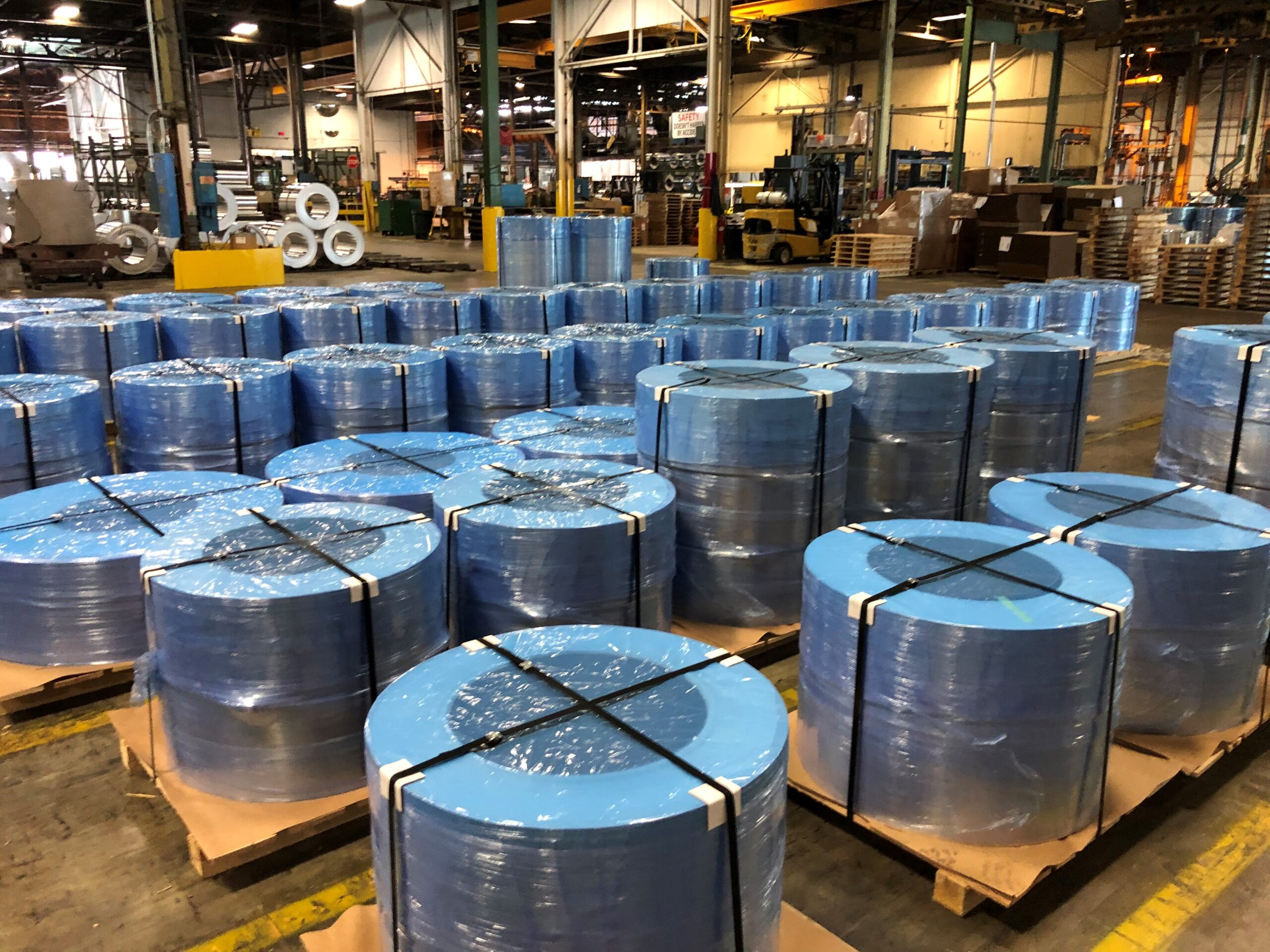
The image shows a steel coil surface protection and packaging quality scene in a plant. The starting surface condition and the inspection after wrapping belong to the same VCI control process.
Keep Claims Inside Evidence
It is reasonable to say that VCI materials are used in steel coil packaging for corrosion protection. It is not reasonable to promise a specific protection duration or route outcome without test evidence and route assumptions. Quality content should make that boundary explicit.
A Practical Next Step
Write a VCI packaging control sheet for each route category: starting coil condition, VCI placement, outer package sequence, traceability points, and validation requirement. Then review the sheet with packaging, quality, and logistics before adopting it across product families on the automatic coil packing line.
Visual Details

Click to enlarge

Click to enlarge
Click to enlarge

Click to enlarge
Watch How It Works
Discover how our automated packaging solutions optimize your production line efficiency. This video demonstrates the seamless operation designed for maximum protection.
Trusted by Steel Mills & Industry Leaders
Global manufacturers rely on FHOPE heavy duty packaging equipment


Ready to optimize your packaging line?
Get a custom quote with ROI analysis. Our engineers respond within 24 hours.
- Free layout design
- Global installation support
- 2-year warranty included
Your information is secure and will never be shared.
Related Machines
Steel Coil Packaging line
View Details →
Vertical coil packaging line
View Details →
Hose Coil Packaging line
View Details →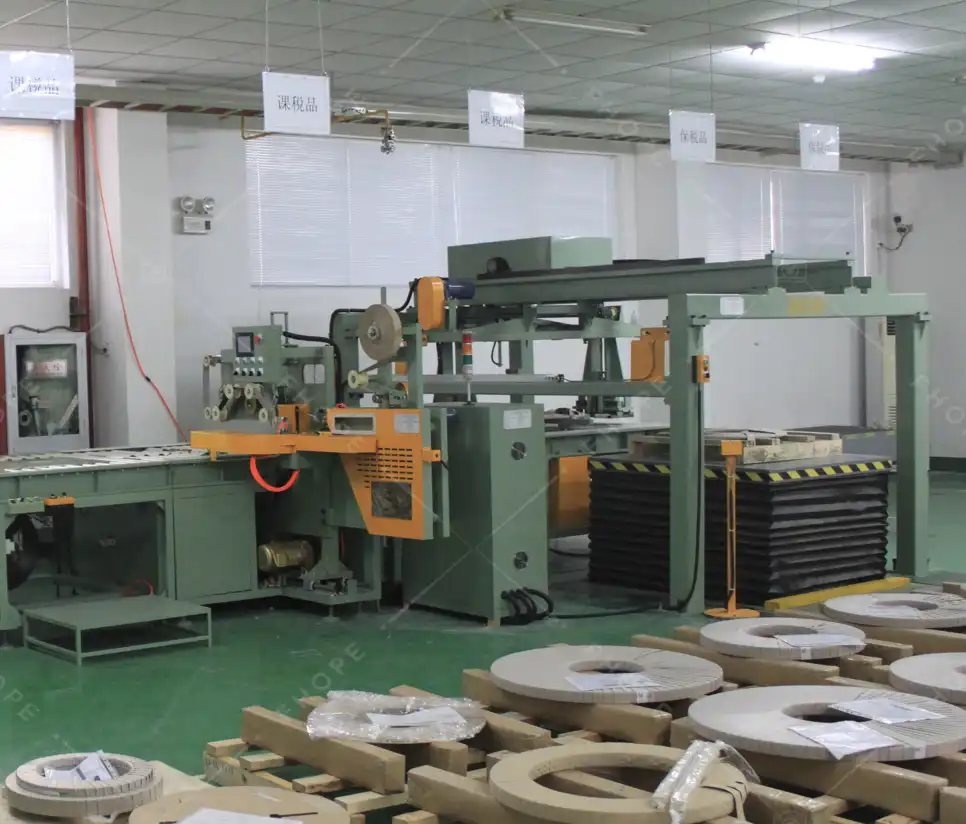
Copper Coil Packaging line
View Details →
Wire Coil Packaging line
View Details →
Panel Packaging line
View Details →
Pipe Bagging Machine
View Details →
Aluminum profile packing line
View Details →
FHOPE Automatic pipe tube bundling&strapping line
View Details →
Automatic pipe tube bundling & strapping line
View Details →
Automatic steel tube strapping machine
View Details →
FHOPE Automatic steel tube packing machine
View Details →
Automatic plastic Pipe strapping packing line
View Details →
Automatic PPR/PVC Pipe bagging line
View Details →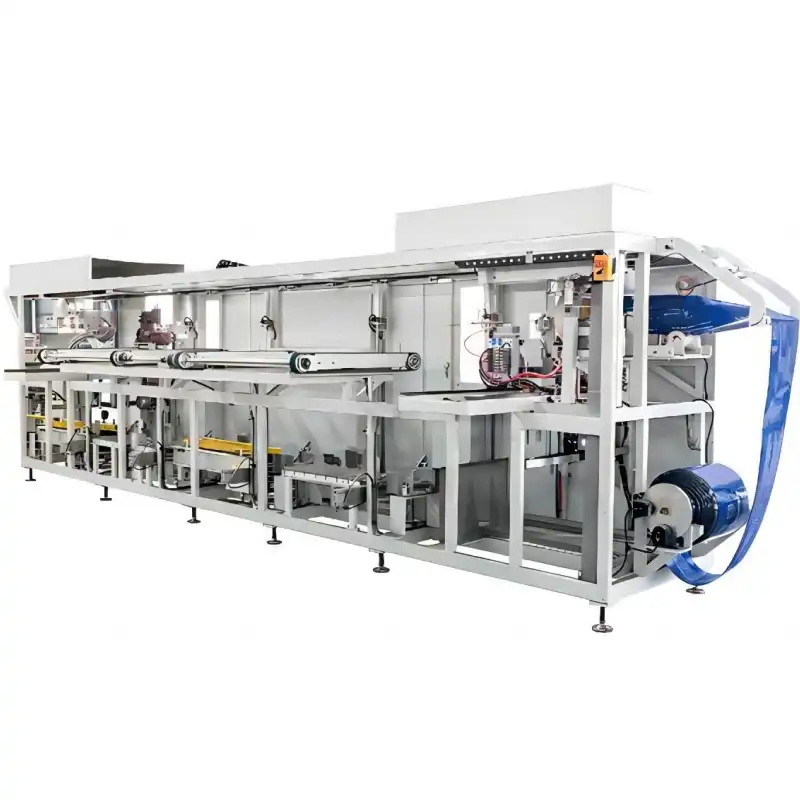
Platsic pipe bag packing machine
View Details →
Tyre Packing Machine FPT-200
View Details →
Tyre Packing Machine FPT-300
View Details →
Tyre Packing Machine FPT-400
View Details →
Cable Coil Packing Machine-FPCA100
View Details →