Steel Coil Packaging Specification Template Guide
Stop relying on verbal packaging instructions. This guide shows what a steel coil packaging specification must contain — family-based rules, layer-by-layer build-up, handling assumptions, and release inspection.
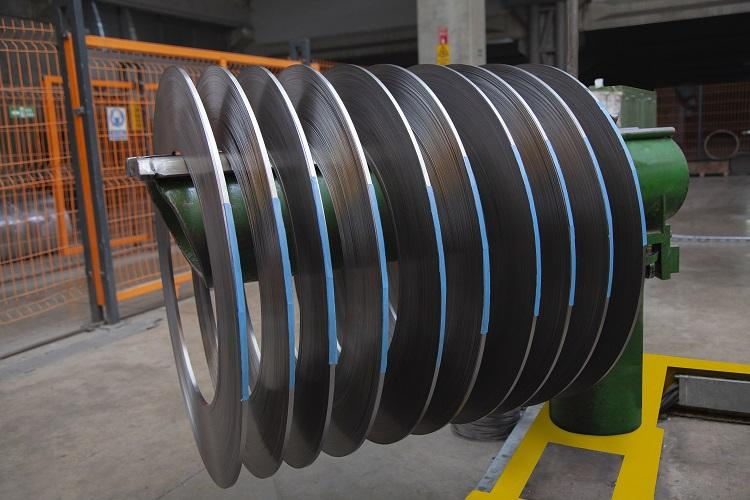
How to Write a Steel Coil Packaging Specification
How to Write a Steel Coil Packaging Specification
Many coil packing projects become harder than they need to be because the packaging requirement exists only as habit, verbal instruction, or a collection of old customer notes. A packaging line cannot be designed, compared, or accepted well against an unwritten standard. The solution is not a longer quotation. It is a usable steel coil packaging specification.
This guide shows what a packaging specification for an automatic coil packing line should contain and how to keep it practical.
Start with the Product Families
A specification should be written around real product families, not around one generic "steel coil." Separate families by the factors that actually change the package:
| Family Factor | Example That Changes the Package |
|---|---|
| Surface sensitivity | Painted, polished, or stainless surface |
| Coil dimensions and weight | Narrow versus wide or heavy coils |
| Edge condition | Sensitive edges needing protectors |
| Storage and shipment route | Indoor storage versus export handling |
| Moisture or corrosion protection | VCI, sealed wrap, or paper requirements |
| Output form | Individual coil versus bundle or stack |
If multiple families share the same package logic, they may be grouped. If the package changes materially, they should not be forced into one rule.
Define the Package Objective
State what the finished package must do. Typical objectives include protecting the surface, resisting moisture exposure, stabilizing a stack, keeping identification visible, or preparing the coil for export handling. The objective should be written in operational terms rather than marketing language.
For example, "ready for internal transfer and indoor storage" and "ready for long export shipment" are not the same package objective.
Write the Package Build-Up in Sequence
The most useful specification explains the package step by step:
- Required coil condition before packing
- Approved contact or inner protection materials
- Edge, side, or bore protection requirements
- Wrapping materials and layer logic
- Strapping method and placement
- Label and identity requirements
- Final inspection and release conditions
This sequence helps engineering, operations, and suppliers compare the same end result.
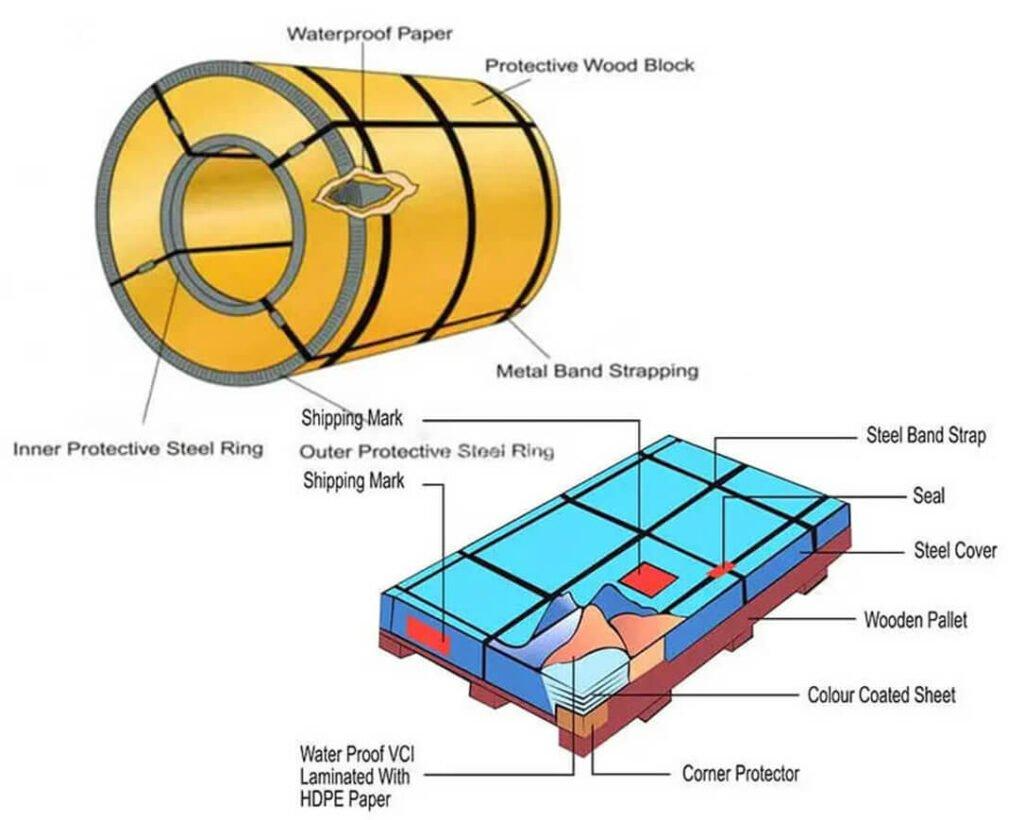
The image shows a cross-section of the steel coil export packaging structure. The specification should describe this build-up layer by layer so every station and supplier works toward the same end result.
It also reduces confusion during revisions. When a customer changes one packaging requirement, the team can update the affected step instead of reinterpreting the whole package from scratch.
Separate Mandatory Rules from Selectable Options
Some parts of the package are fixed by customer or route. Others vary by product family or order. The document should show which items are mandatory and which are recipe-driven. Otherwise, teams either over-package simple products or allow avoidable variation in critical products.
This distinction also makes automation easier because the line can link the correct recipe to the correct product family.
Define Material Compatibility and Contact Points
If the coil has a painted, polished, stainless, or otherwise sensitive surface, the specification should identify approved contact layers and restricted contact points. If moisture protection is required, state the role of VCI, sealed wrap, paper, or other materials without assuming one material solves every route.
The specification should describe the required package result, not a vague instruction to "protect carefully."
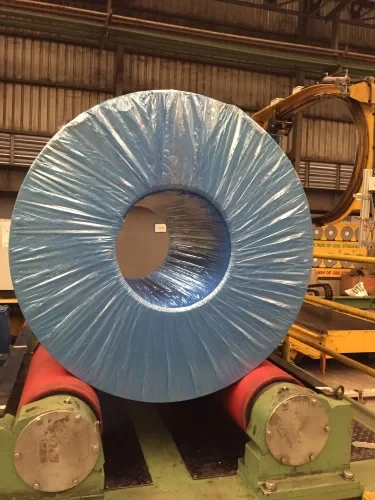
The image shows a VCI stretch film wrapped coil. When moisture or corrosion protection is required, the specification should state which material, layer sequence, and release conditions apply to each product family.
Connect the Document to the Recipe System
If the project uses automatic recipe selection, the packaging specification should be the upstream source of that logic. Each product family should map to a controlled packaging rule, and each exception should be visible rather than hidden in operator habit. This keeps the document useful after the quotation stage.
A specification that cannot be translated into shop-floor rules will not control the final package consistently.
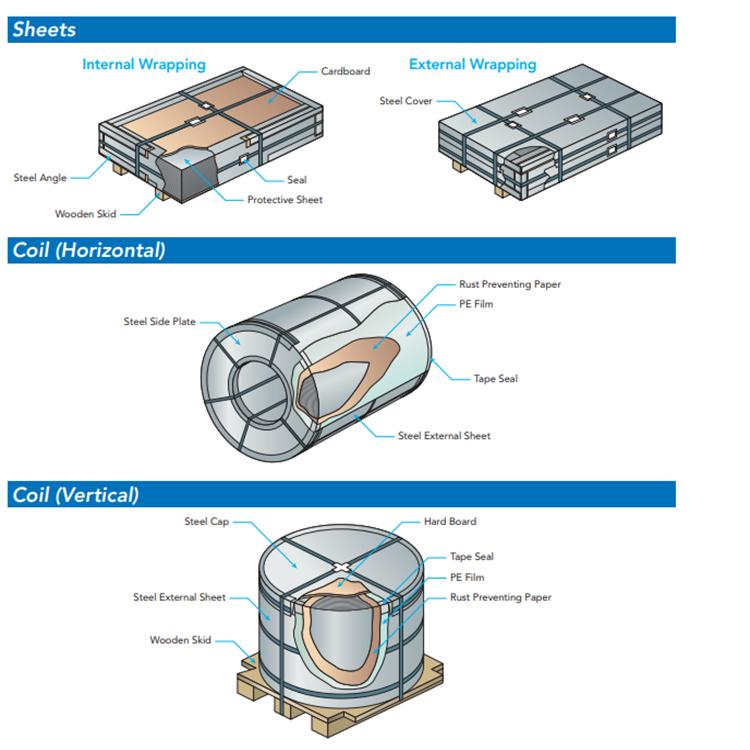
The image shows another view of the steel coil export packaging structure. This layer stack should be encoded in the recipe system so each product family receives the same controlled sequence on the line.
Include Handling, Storage, and Shipping Assumptions
The package is only correct within the conditions it was written for. State the expected handling method, indoor or outdoor storage assumption where relevant, shipment route category, and whether the package will be stacked or palletized.
When those assumptions are missing, disputes later appear between packaging, logistics, and the customer even if the line followed its own recipe correctly.
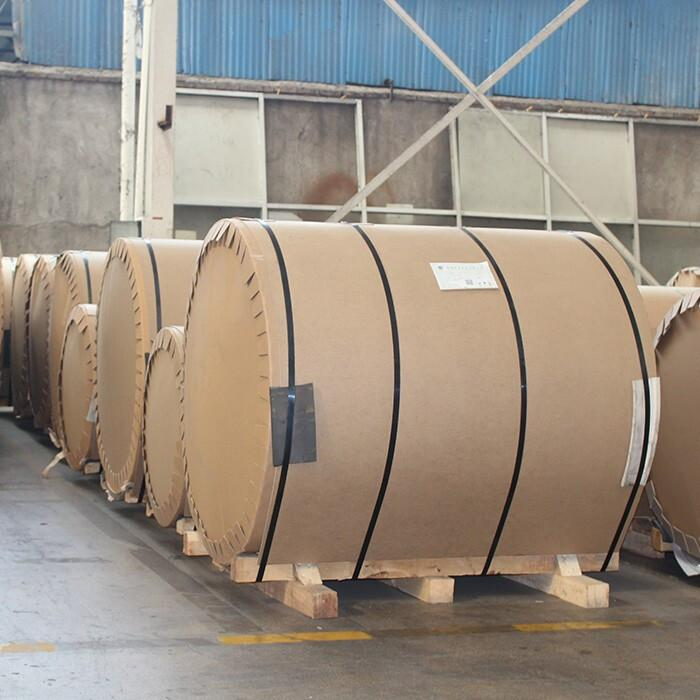
The image shows fully packaged steel coils ready for ocean freight. The specification must state the handling and shipping assumptions this final package was designed for, so the package result matches the real route.
Watch a steel slitting coil packaging line system:

Write Inspection and Acceptance into the Document
A packaging specification without inspection rules is only half complete. For each product family, define what must be checked at release: package completeness, strap position, label accuracy, protection placement, visible damage, and any route-specific requirement.
If a product requires representative trials or route validation, record that as a release condition rather than hiding it in a separate meeting note.
Keep the Document Readable
The best specification is the one operators, engineers, and suppliers can all use. Keep it structured, with tables where useful, family-based rules, and clear exceptions. Avoid mixing customer history, commercial notes, and packaging instructions in one uncontrolled file.
The document should support quotation, design review, training, and acceptance without changing meaning each time it is reused.
If the plant works in more than one language, keep the key packaging terms and release conditions consistent across versions. Packaging disputes often start with small wording differences rather than with one clearly wrong instruction.
A Practical Next Step
Build a packaging specification template around product family, package objective, package build-up, material rules, handling assumptions, and inspection points. Then test it on two very different coil families to confirm that the document is specific enough to guide real packaging decisions on the automatic coil packing line.
Visual Details
Click to enlarge

Click to enlarge

Click to enlarge

Click to enlarge
Watch How It Works
Discover how our automated packaging solutions optimize your production line efficiency. This video demonstrates the seamless operation designed for maximum protection.
Trusted by Steel Mills & Industry Leaders
Global manufacturers rely on FHOPE heavy duty packaging equipment


Ready to optimize your packaging line?
Get a custom quote with ROI analysis. Our engineers respond within 24 hours.
- Free layout design
- Global installation support
- 2-year warranty included
Your information is secure and will never be shared.
Related Machines
Steel Coil Packaging line
View Details →
Vertical coil packaging line
View Details →
Hose Coil Packaging line
View Details →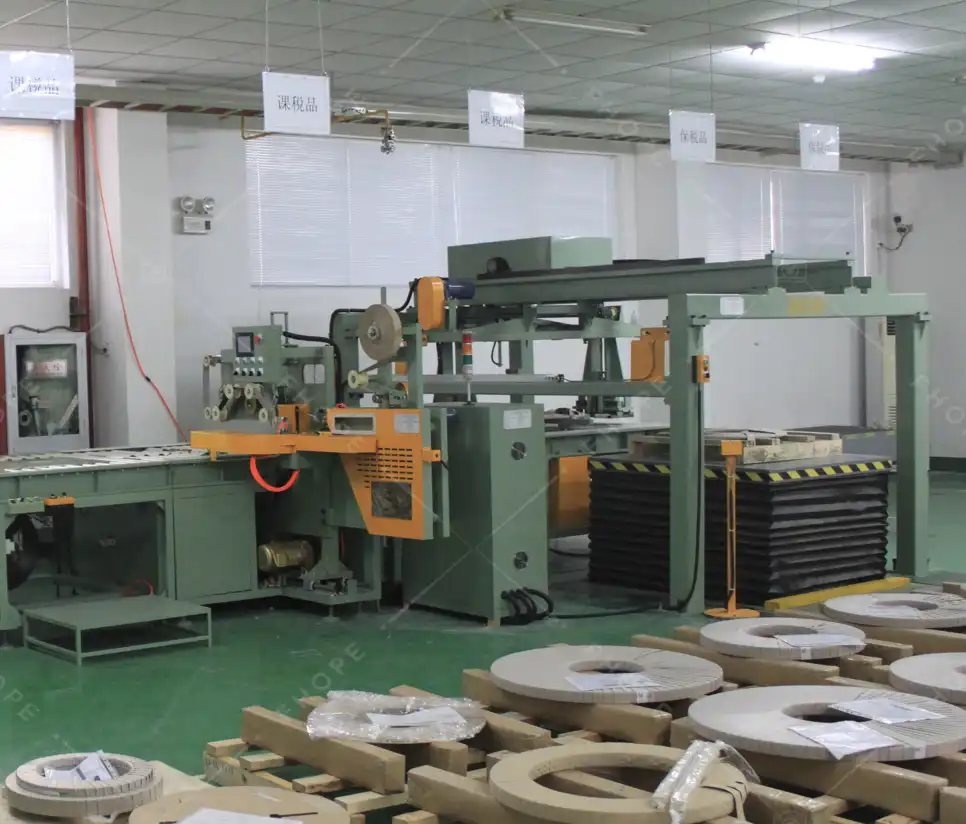
Copper Coil Packaging line
View Details →
Wire Coil Packaging line
View Details →
Panel Packaging line
View Details →
Pipe Bagging Machine
View Details →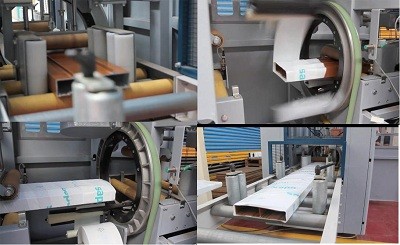
Aluminum profile packing line
View Details →
FHOPE Automatic pipe tube bundling&strapping line
View Details →
Automatic pipe tube bundling & strapping line
View Details →
Automatic steel tube strapping machine
View Details →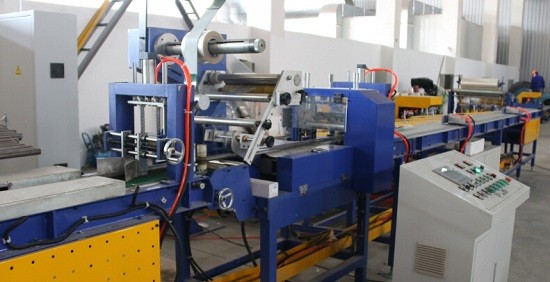
FHOPE Automatic steel tube packing machine
View Details →
Automatic plastic Pipe strapping packing line
View Details →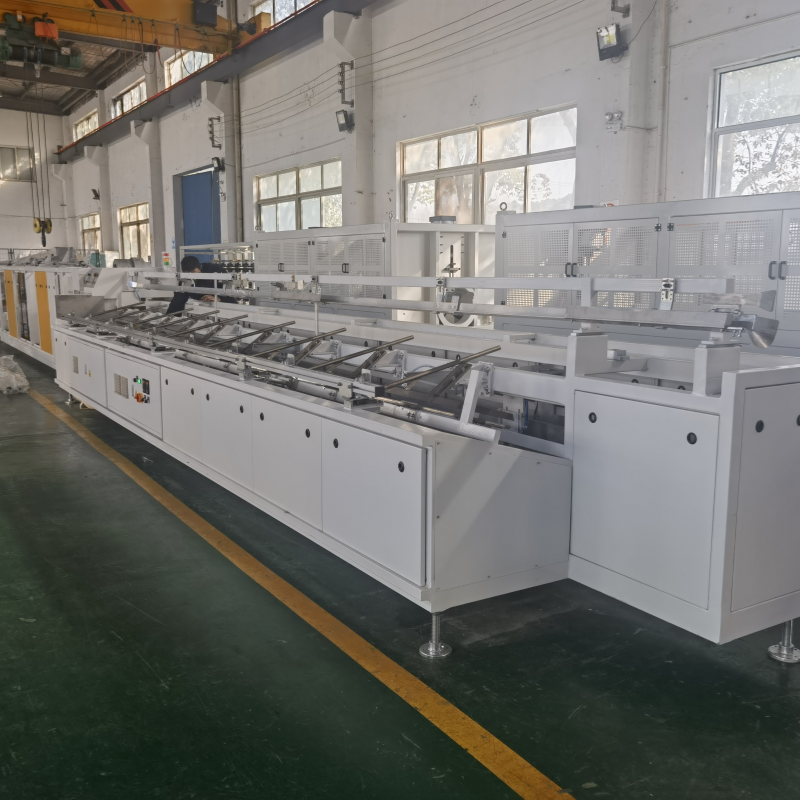
Automatic PPR/PVC Pipe bagging line
View Details →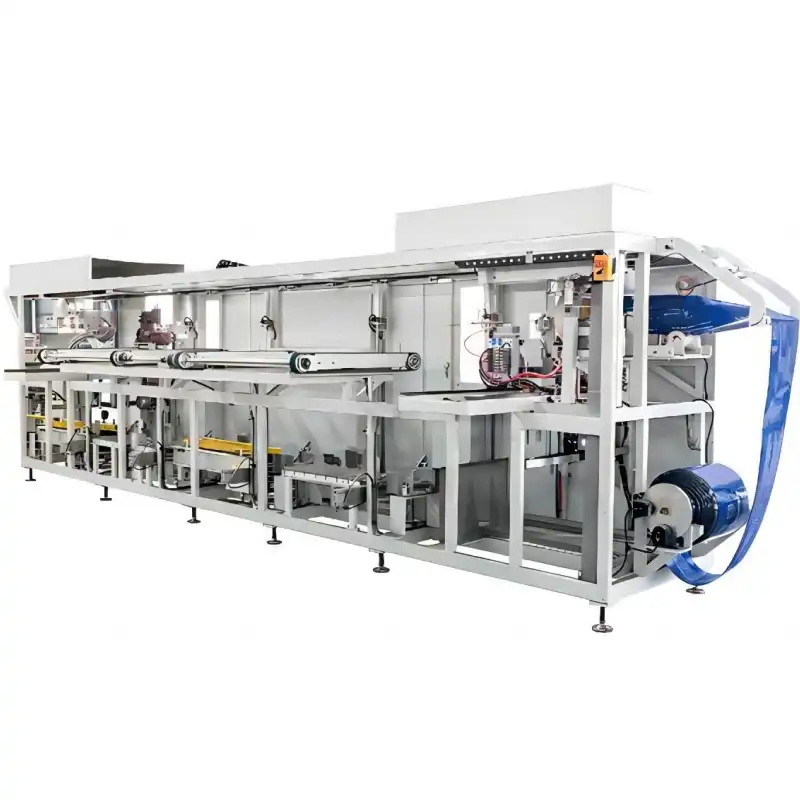
Platsic pipe bag packing machine
View Details →
Tyre Packing Machine FPT-200
View Details →
Tyre Packing Machine FPT-300
View Details →
Tyre Packing Machine FPT-400
View Details →
Cable Coil Packing Machine-FPCA100
View Details →