How Should Steel Coils Be Packed for Ocean Freight?
A package that passes inspection in your workshop can still fail inside a shipping container. This guide covers the three ocean freight risks for steel coils — moisture, mechanical damage, and lost identity — and how to engineer against them.
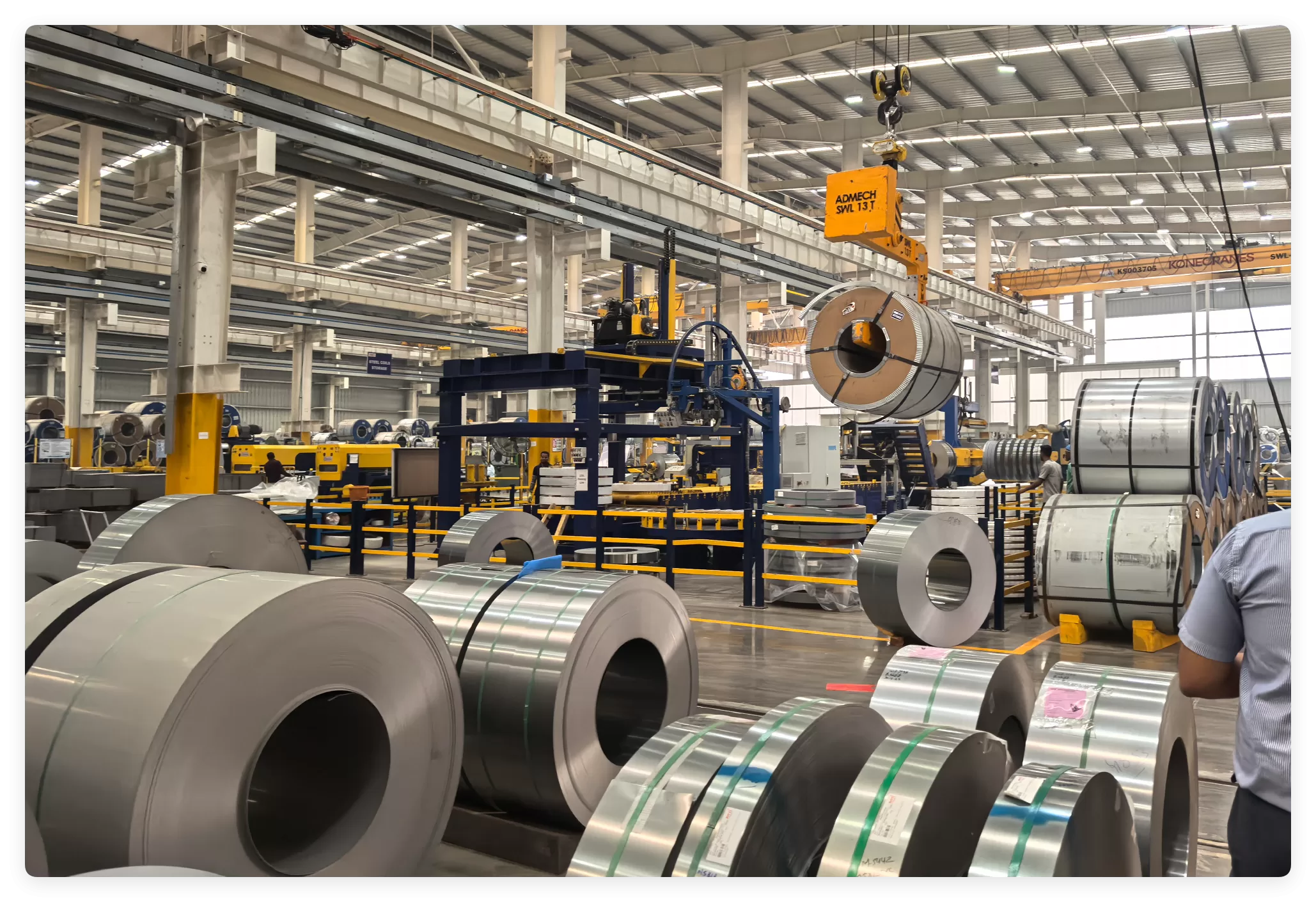
Ocean Freight and Export Packaging for Steel Coils
Ocean Freight and Export Packaging for Steel Coils
Ocean freight exposes a steel coil to humidity, condensation, salt, vibration, stacking, and long storage time. The packaging must be designed for that route, not for a clean warehouse. A package that looks protective on the factory floor can fail inside a container.
This guide helps exporters, packaging, quality, and logistics teams plan coil packaging for long-distance sea transport, including the wrapping scope on an automatic coil packing line.
| Export risk | What the package must address |
|---|---|
| Moisture and corrosion | Dry surface, VCI material, sealing, and condensation handling |
| Mechanical damage | Edge protection, side plates, inner-bore protection, and correct strapping |
| Identity loss | Legible labels and a record that survives handling |
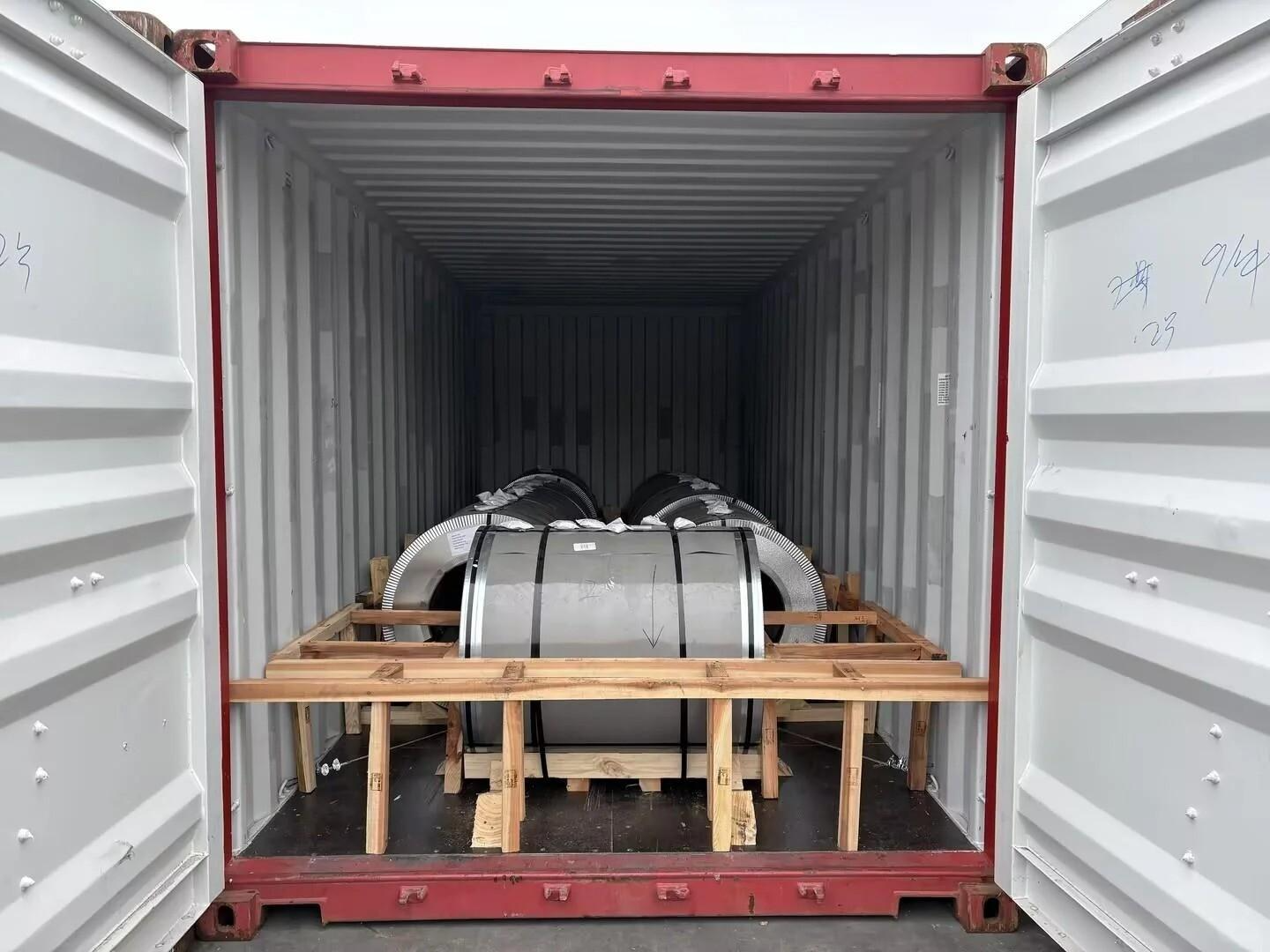
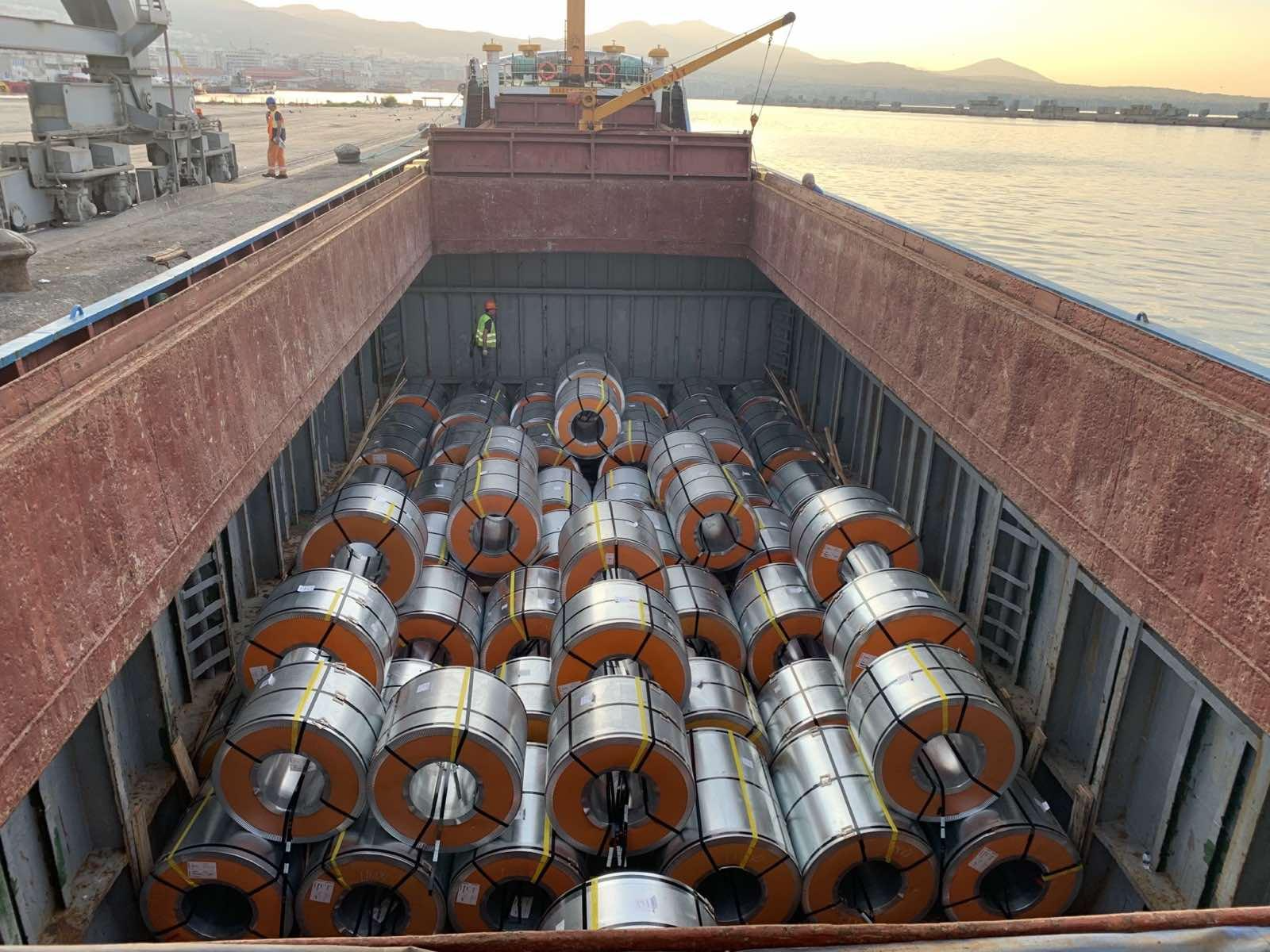
The image shows fully packaged steel coils ready for ocean freight. The completed package is the acceptance target for the export route, not an appearance that looks acceptable in the factory.
Define the Voyage and Storage Conditions
State the port-to-port route, expected voyage duration, season, container or breakbulk condition, transfer handling, and the storage period at origin and destination. Also state whether the package will be stacked, loaded below or above other cargo, and handled by crane, forklift, or spreader.
Those conditions decide the protection level, not the coil's size alone.
Protect Against the Three Main Risks
Export coil packaging must address moisture and corrosion, mechanical damage, and identity loss.
For moisture, use a combination of a dry surface, VCI or rust-inhibiting material, sealing, and packaging that can handle condensation. For mechanical damage, use edge protection, side plates, inner-bore protection, and correct strapping. For identity, keep the coil number, order, weight, and label legible and attached so the record survives handling.
Select Materials for the Route
VCI film or VCI paper is often part of an export recipe because it releases a protective vapor. Stretch film provides a tight outer wrap, while paper or non-woven material can cushion or absorb in specific applications. The combination and sequence matter more than a single product.
Strapping should hold the package without cutting into the coil or the wrapping layers. If the coil is sensitive, the contact layer should not mark the surface.
Plan the Package as a System
Write the export recipe in sequence: surface preparation, inner protection, edge protection, wrapping layers, strapping, labeling, and final inspection. For each step, state the material, method, and acceptance condition.
Include the handling method for loading into the container or hold. A package that cannot be lifted without damage is not complete.
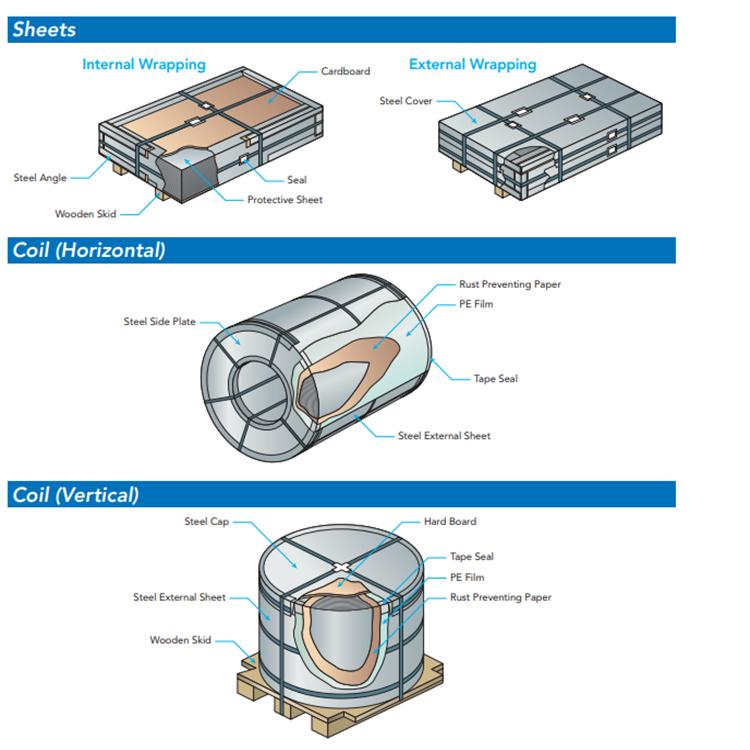
The image shows a cross-section diagram of the export packaging structure. The layer sequence is the actual recipe: surface preparation, contact layer, edge protection, wrapping material, strapping, and labeling must be defined in order.
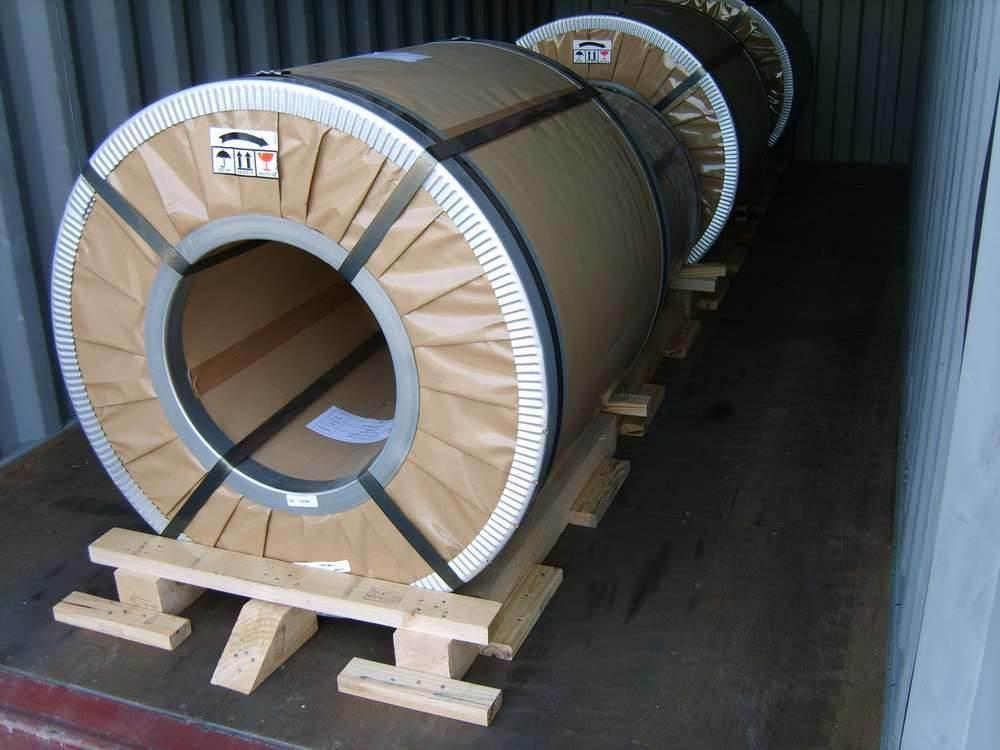
The image shows people around fully packaged steel coils. This is the point where the packaging result is checked before shipment: the surface, the strapping, the label, and the handling method are verified together.
Verify with a Shipping Trial
A material trial should include temperature and humidity cycles or an actual short shipment. Inspect the coil after handling and transit, record the result, and update the recipe. Do not rely on a bench test alone.
The trial conditions and limitations should be recorded so the recipe can be repeated and audited.
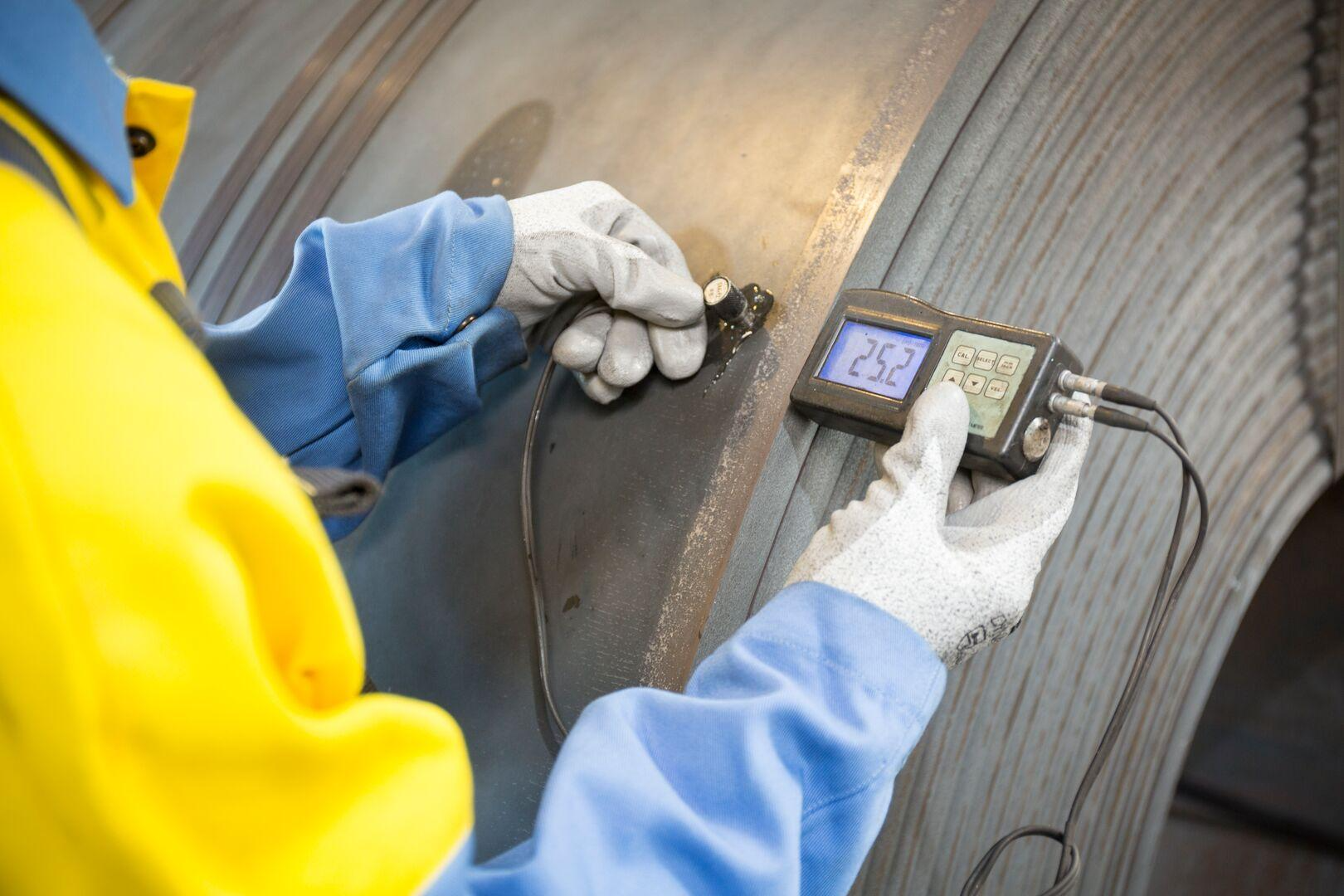
The image shows an export packaging inspection and rust protection test after unpacking. This is the evidence the recipe needs: the coil surface, package condition, and record are inspected after handling and transit.
A Practical Next Step
Create an export packaging specification by product family and destination route. Validate the full package with a handling and shipping trial, then record the inspection results and any changes made.
Keep the same route and trial conditions visible when comparing the automatic coil packing line wrapping scope, so the packaging recipe can be repeated for the next order.
Watch a coil VCI packing machine and big coil wrapper in operation:

Visual Details
Click to enlarge
Click to enlarge
Click to enlarge
Click to enlarge
Watch How It Works
Discover how our automated packaging solutions optimize your production line efficiency. This video demonstrates the seamless operation designed for maximum protection.
Trusted by Steel Mills & Industry Leaders
Global manufacturers rely on FHOPE heavy duty packaging equipment


Ready to optimize your packaging line?
Get a custom quote with ROI analysis. Our engineers respond within 24 hours.
- Free layout design
- Global installation support
- 2-year warranty included
Your information is secure and will never be shared.
Related Machines
Steel Coil Packaging line
View Details →
Vertical coil packaging line
View Details →
Hose Coil Packaging line
View Details →
Copper Coil Packaging line
View Details →
Wire Coil Packaging line
View Details →
Panel Packaging line
View Details →
Pipe Bagging Machine
View Details →
Aluminum profile packing line
View Details →
FHOPE Automatic pipe tube bundling&strapping line
View Details →
Automatic pipe tube bundling & strapping line
View Details →
Automatic steel tube strapping machine
View Details →
FHOPE Automatic steel tube packing machine
View Details →
Automatic plastic Pipe strapping packing line
View Details →
Automatic PPR/PVC Pipe bagging line
View Details →
Platsic pipe bag packing machine
View Details →
Tyre Packing Machine FPT-200
View Details →
Tyre Packing Machine FPT-300
View Details →
Tyre Packing Machine FPT-400
View Details →
Cable Coil Packing Machine-FPCA100
View Details →