Why Isn\'t Your Packing Line Reaching Its Rated Capacity?
A 60-second wrapper is not the bottleneck if it waits 5 minutes for a coil. This guide shows how to find the real constraint — buffers, changeover, or interventions — and improve it before adding speed elsewhere.
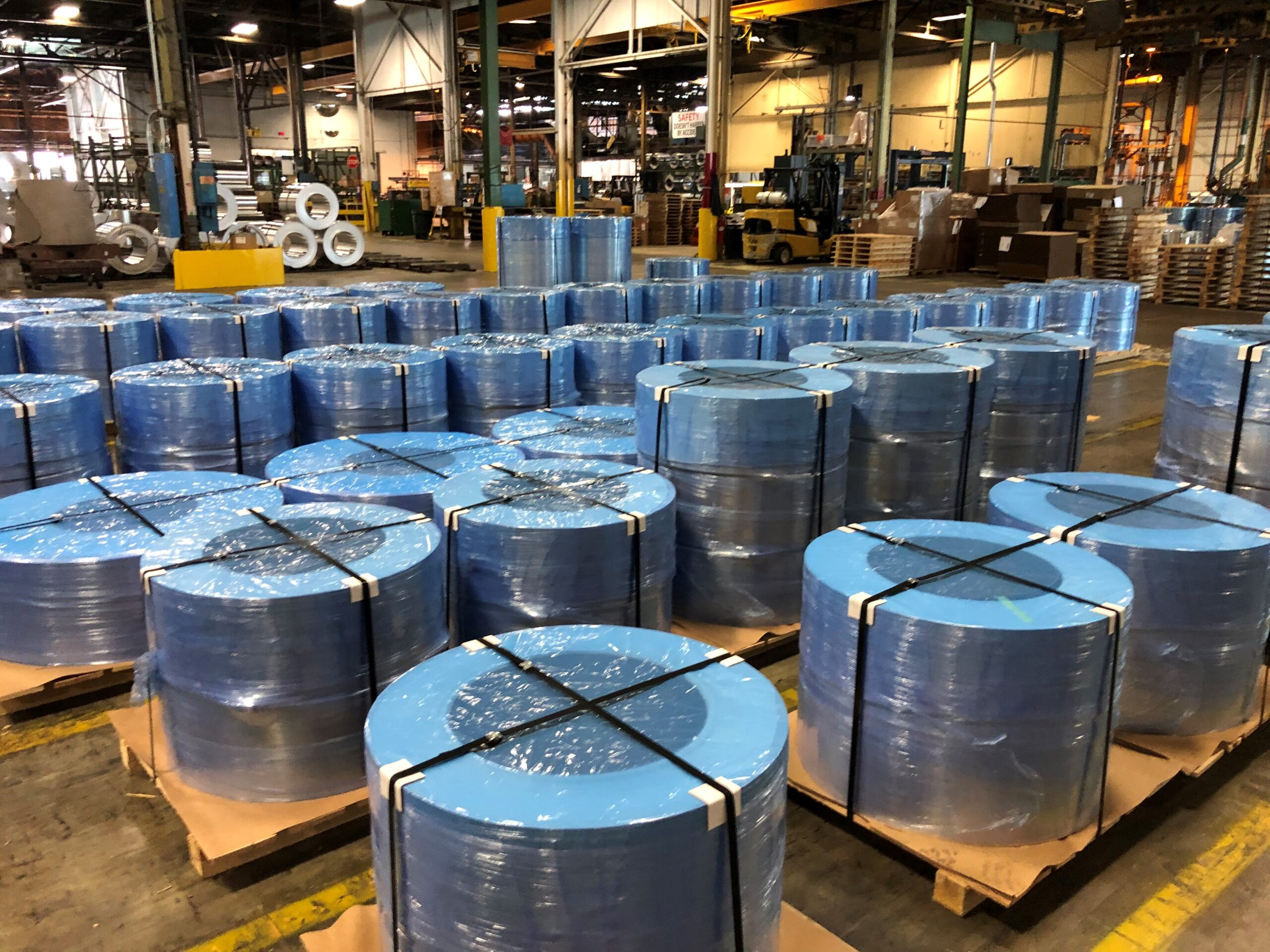
How to Balance Coil Packing Line Capacity: Cycle Time, Buffers and Changeover
How to Balance Coil Packing Line Capacity: Cycle Time, Buffers and Changeover
Line capacity is not the speed of the fastest station. It is the number of accepted coils the line can produce over a sustained period after changeovers, buffers, replenishment, and recovery. Balancing means making the whole line match the release pattern of the upstream process.
This guide helps production and engineering teams calculate and improve the real capacity of an automatic coil packing line.
| Time type | What it captures |
|---|---|
| Normal cycle time | Time per coil under stable conditions |
| Setup or changeover | Time between the last good coil and the first good coil of the next family |
| Intervention | Material replenishment, exceptions, and manual corrections |
Measure the Complete Boundary
Define the period, the product mix, and the stations included: arrival, buffer, orientation, wrapping, strapping, weighing, labeling, stacking, and discharge. Exclude only what is clearly outside the project scope.
The useful unit is accepted coils per shift, not cycles per hour.

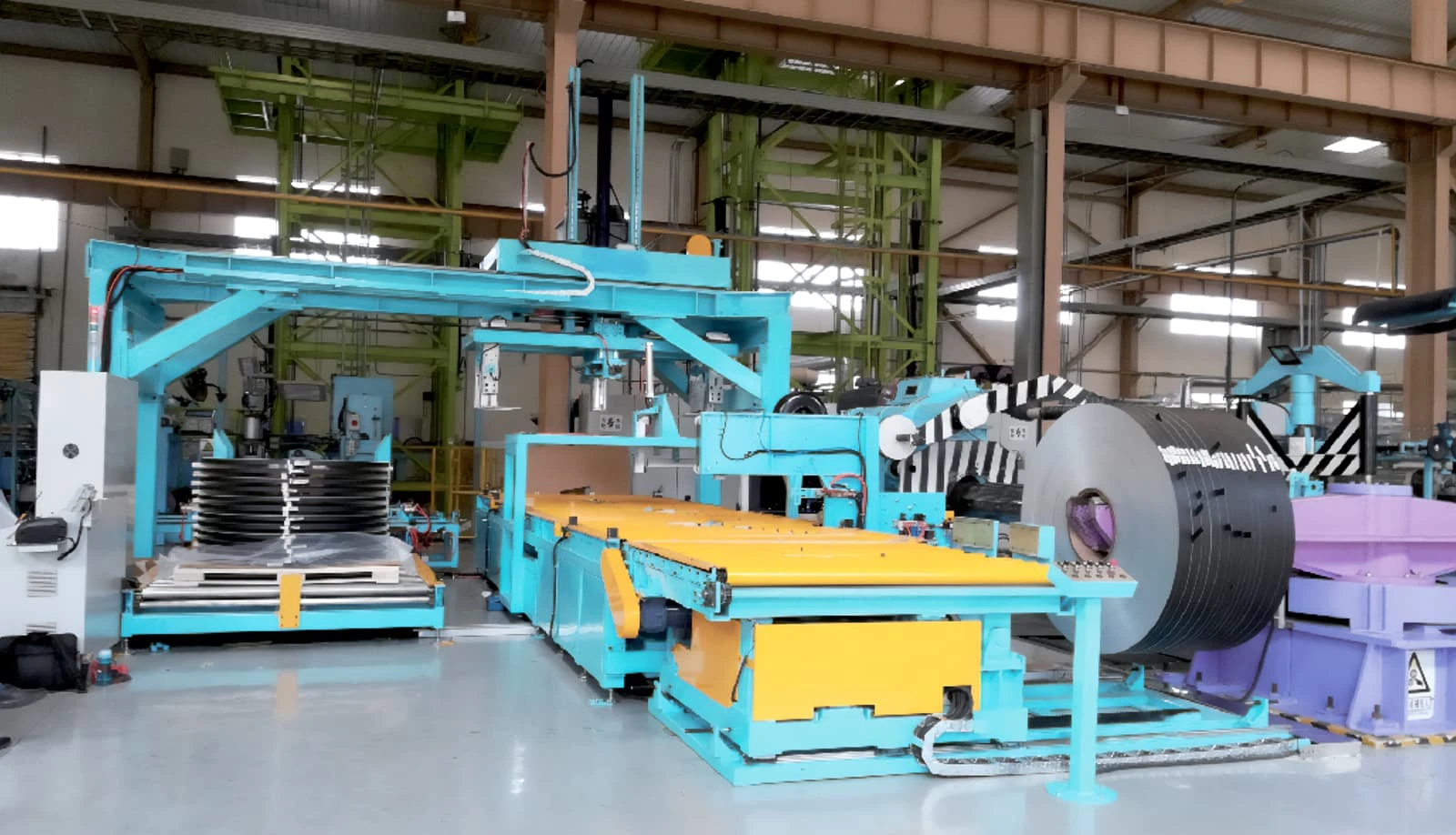
The image shows a stainless steel coil packing machine line. Capacity is measured across this connected flow, including every station and handoff, not only the wrapping machine.
Record Station Times Separately
For each station, record the normal cycle time, the setup or changeover time, and the intervention time for material replenishment and exceptions. Separate the times so the constraint is visible.
A wrapper that runs in 60 seconds is not the bottleneck if it waits 5 minutes for a coil or stops for a label error.

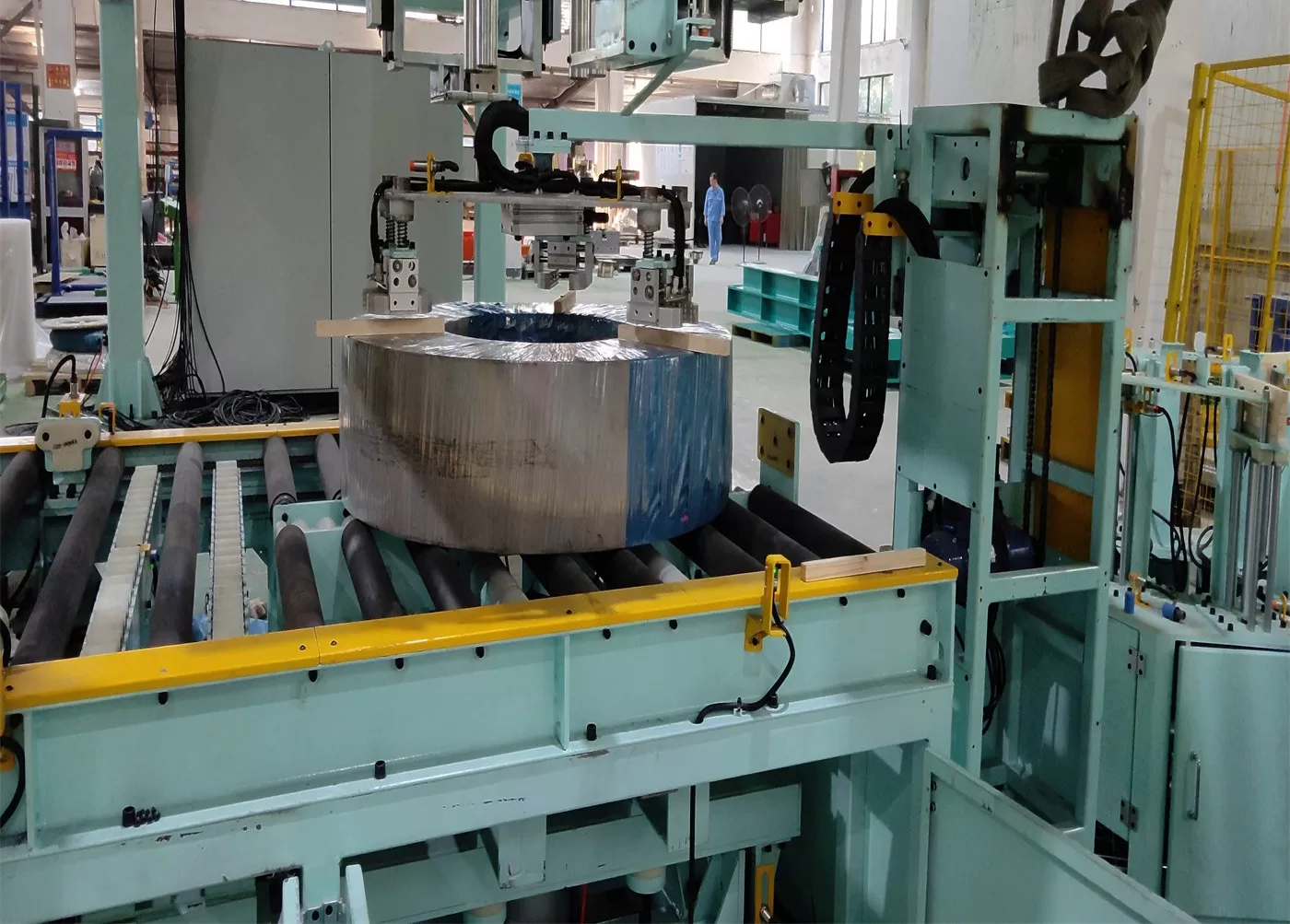
The image shows a steel coil packaging line in vertical handling. The same station-time logic applies: orientation change, transfer, and buffering consume capacity just like the wrapping cycle.
Find the Constraint
The bottleneck is the station or handoff that limits accepted output. It may be the buffer, the stacking station, the weighing scale, the labeling step, or the operator who confirms the first article.
Improve the constraint before adding capacity elsewhere. Adding speed upstream only increases the queue.
Size the Buffers
The buffer must absorb the difference between upstream release and downstream cycle without creating waiting, mixing, or safety risk. Define the buffer capacity in coil positions and the rule for when it is full.
A buffer that has no ownership rule is not a buffer; it is a pile of coils.

The image shows a steel coil packing line. The number of coil positions between stations, and the rule for using them, must be visible in the same capacity model as the station times.
Include Changeover in Capacity
If the line changes width, weight, orientation, or packaging recipe during a shift, changeover consumes capacity. Measure the time between the last good coil of one family and the first good coil of the next.
Reducing changeover frequency or time can add more useful output than increasing station speed.
Use a Simple Capacity Example
Suppose a line runs two shifts, with a nominal wrapping cycle of 2 minutes per coil and 30 minutes of planned changeover per shift. The theoretical capacity is still limited by the slowest station and by changeover and exception time. The calculation should subtract changeover and planned stops before comparing options.
Validate with a Sustained Trial
Run a representative product mix over a full shift or a defined number of coils. Record accepted output, changeover time, replenishment, and intervention. Compare the result with the calculation and update the model.

The image shows a steel coil packing line in an operating context. The sustained trial should be run on the same kind of line, with the real product mix and the same operators, to validate the capacity calculation.
A Practical Next Step
Create a station-time table and a buffer rule, then run a short observation period. The constraint identified by real data is the right place to invest.
Keep the same station-time and buffer model visible for the automatic coil packing line comparison before adding capacity.
Watch an automatic copper strip coil upending, wrapping and stacking line in operation:

Visual Details

Click to enlarge

Click to enlarge
Click to enlarge
Click to enlarge
Watch How It Works
Discover how our automated packaging solutions optimize your production line efficiency. This video demonstrates the seamless operation designed for maximum protection.
Trusted by Steel Mills & Industry Leaders
Global manufacturers rely on FHOPE heavy duty packaging equipment


Ready to optimize your packaging line?
Get a custom quote with ROI analysis. Our engineers respond within 24 hours.
- Free layout design
- Global installation support
- 2-year warranty included
Your information is secure and will never be shared.
Related Machines
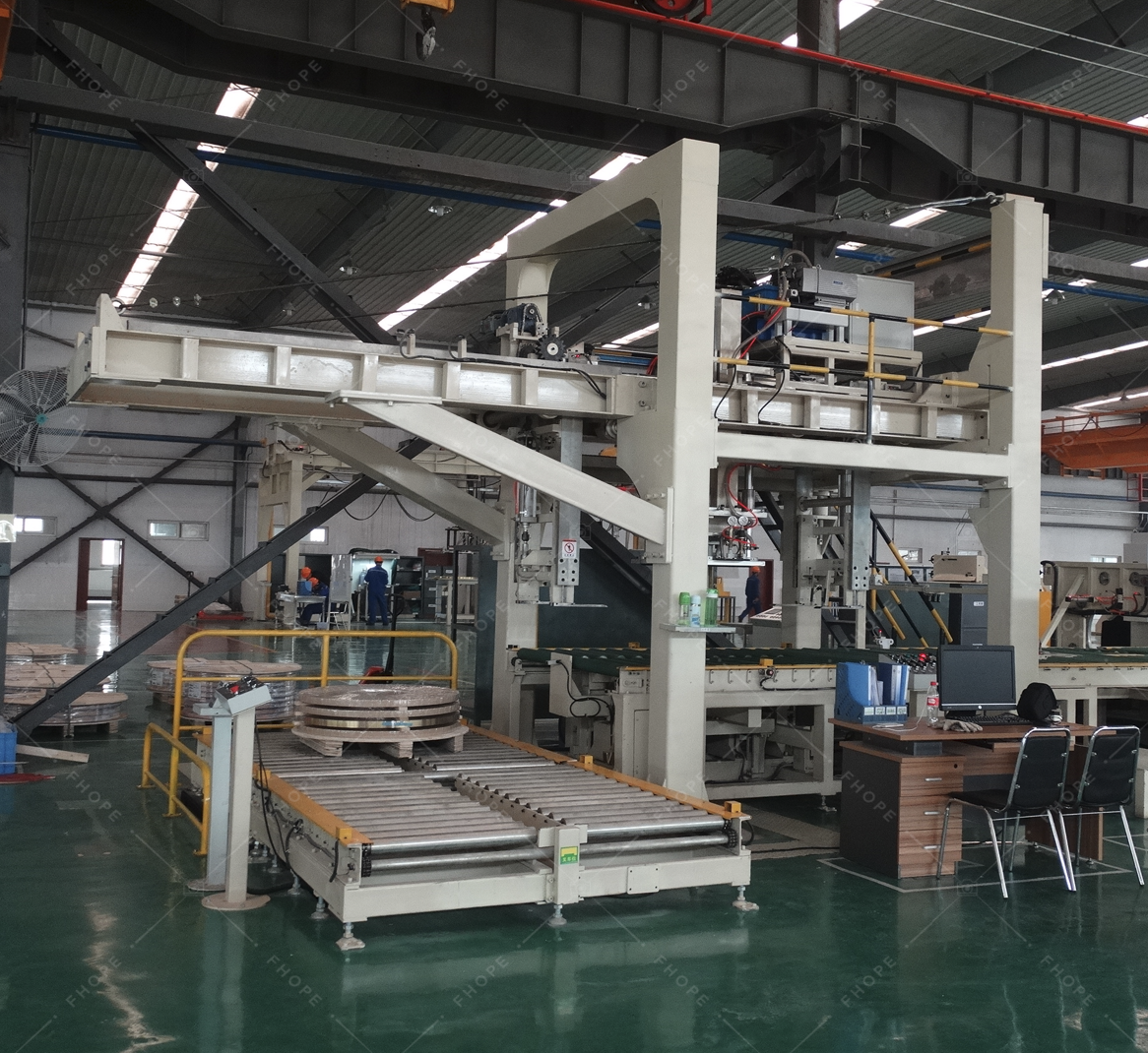
Steel Coil Packaging line
View Details →
Vertical coil packaging line
View Details →
Hose Coil Packaging line
View Details →
Copper Coil Packaging line
View Details →
Wire Coil Packaging line
View Details →
Panel Packaging line
View Details →
Pipe Bagging Machine
View Details →
Aluminum profile packing line
View Details →
FHOPE Automatic pipe tube bundling&strapping line
View Details →
Automatic pipe tube bundling & strapping line
View Details →
Automatic steel tube strapping machine
View Details →
FHOPE Automatic steel tube packing machine
View Details →
Automatic plastic Pipe strapping packing line
View Details →
Automatic PPR/PVC Pipe bagging line
View Details →
Platsic pipe bag packing machine
View Details →
Tyre Packing Machine FPT-200
View Details →
Tyre Packing Machine FPT-300
View Details →
Tyre Packing Machine FPT-400
View Details →
Cable Coil Packing Machine-FPCA100
View Details →