How Do You Make a Coil Wrapping Recipe Repeatable?
If your wrapping quality changes with the shift, the recipe lives in someone's head. This guide shows how to lock tension, overlap, and material consumption into a recorded, testable recipe tied to the finished coil.
Film Tension, Overlap and Material Consumption: How to Set a Repeatable Recipe
Film Tension, Overlap and Material Consumption: How to Set a Repeatable Recipe
A repeatable wrapping recipe is more than a film type. It is a set of parameters that can be recorded, transferred to another shift, and verified on the finished package. Tension, overlap, speed, and material consumption are the variables that determine both quality and cost.
This guide helps process engineers, operators, and quality teams build a testable wrapping recipe on an automatic coil packing line.
| Recipe parameter | What it defines |
|---|---|
| Tension | Tightness, film elongation, and edge damage risk |
| Overlap | Coverage percentage and layer pattern |
| Speed | Ring, roller, and material feed match |
| Material | Film type, width, and lot |
| Consumption | Measured film use versus theoretical use |
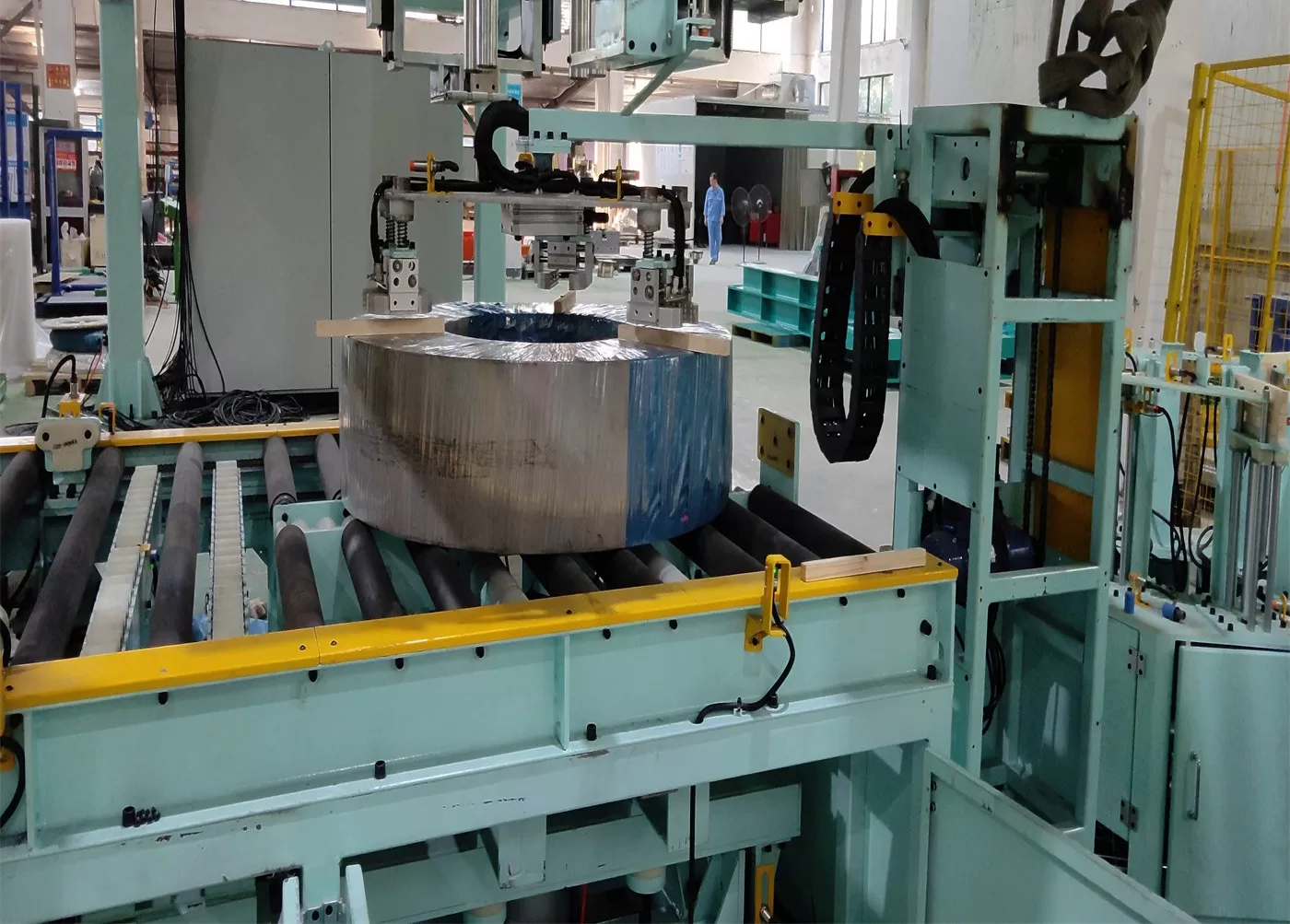
The image shows an automatic steel coil packing machine. The recipe is set on this machine and verified on the finished coil, so the parameters and the result are recorded together.
Define the Package Result First
State the required coverage, overlap, tightness, tail seal, and protection level for each product family. The recipe should be written from the result backward.
Without a defined result, changing tension or overlap becomes a preference.
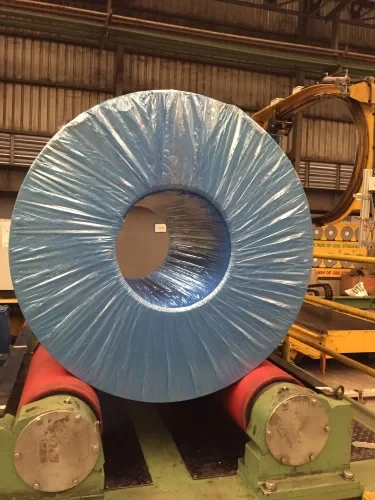
The image shows a coil wrapped with VCI stretch film. The finished package is the reference for the recipe: coverage, overlap, and tail seal are checked against the result, not against the display settings.
Understand Tension
Film tension affects tightness, package stability, film elongation, and the risk of cutting the coil edge or tearing the film. Too little tension creates a loose package; too much can damage the surface or break the film.
Record the tension setting for each family and check the result on the coil, not only on the display.
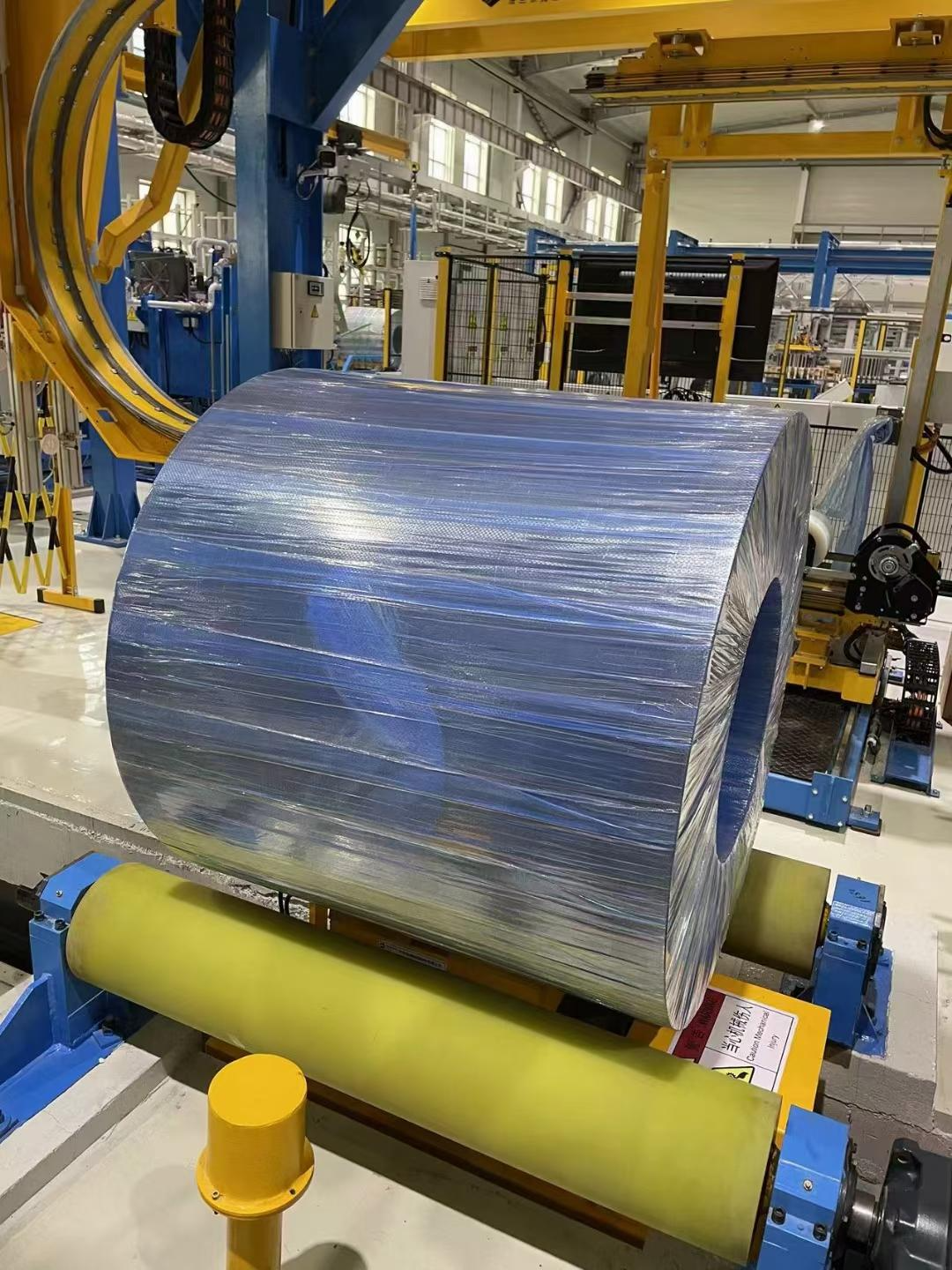
The image shows VCI stretch film and an automatic film setup. The tension setting must match the film type and the coil surface, and the result must be verified on the finished package.
Set Overlap as a Percentage
Overlap is usually expressed as a percentage of the film width and should be measured on the actual wrap. The value may range from partial overlap to multi-layer coverage depending on the protection requirement.
Do not confuse overlap with the number of full layers. Both should be defined in the recipe.
Connect Speed and Motion
Ring speed, roller speed, and material feed speed must be matched to the coil dimensions and the film path. A recipe that works for one width may produce different coverage on another.
Use the machine's parameters, then verify the pattern with a test coil.
Track Material Consumption
Measure the actual film length or weight used per coil and compare it with the theoretical value. Material consumption is a useful check on the recipe and a cost input for ROI.
Record the film lot or specification when consumption changes, because the material itself can vary.
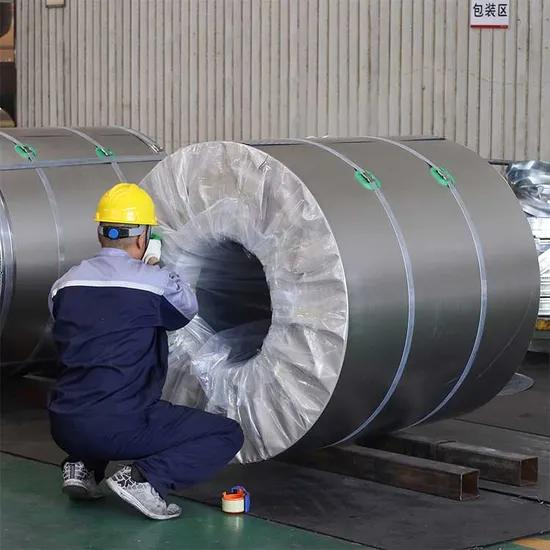
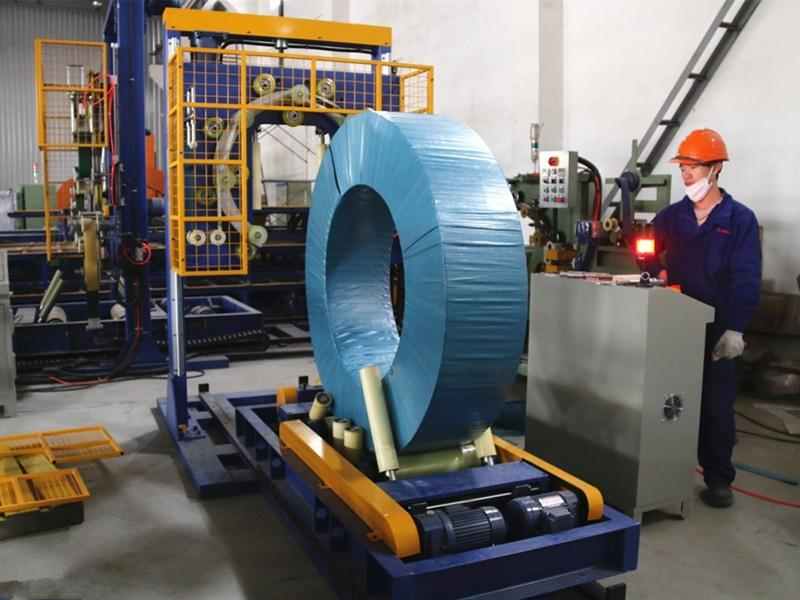
The image shows a VCI stretch film setup with an operator. Film lot, width, and consumption should be recorded so a change in material is visible in the recipe history.
Make the Recipe Visible and Auditable
Store the recipe with the product family, material, dimensions, and inspection result. The next shift should be able to load the same recipe and confirm the same package.
If a change improves quality, document it and verify it on more than one coil.
A Practical Next Step
Create a one-page recipe table with tension, overlap, speed, film, and acceptance check per family. Run a test coil for each family and record the measured result.
Keep the same recipe table visible for the automatic coil packing line configuration and update it whenever the material or product family changes.
Watch a coil wrapping machine with stretch film and woven material in operation:

Visual Details

Click to enlarge

Click to enlarge

Click to enlarge

Click to enlarge
Watch How It Works
Discover how our automated packaging solutions optimize your production line efficiency. This video demonstrates the seamless operation designed for maximum protection.
Trusted by Steel Mills & Industry Leaders
Global manufacturers rely on FHOPE heavy duty packaging equipment


Ready to optimize your packaging line?
Get a custom quote with ROI analysis. Our engineers respond within 24 hours.
- Free layout design
- Global installation support
- 2-year warranty included
Your information is secure and will never be shared.
Related Machines
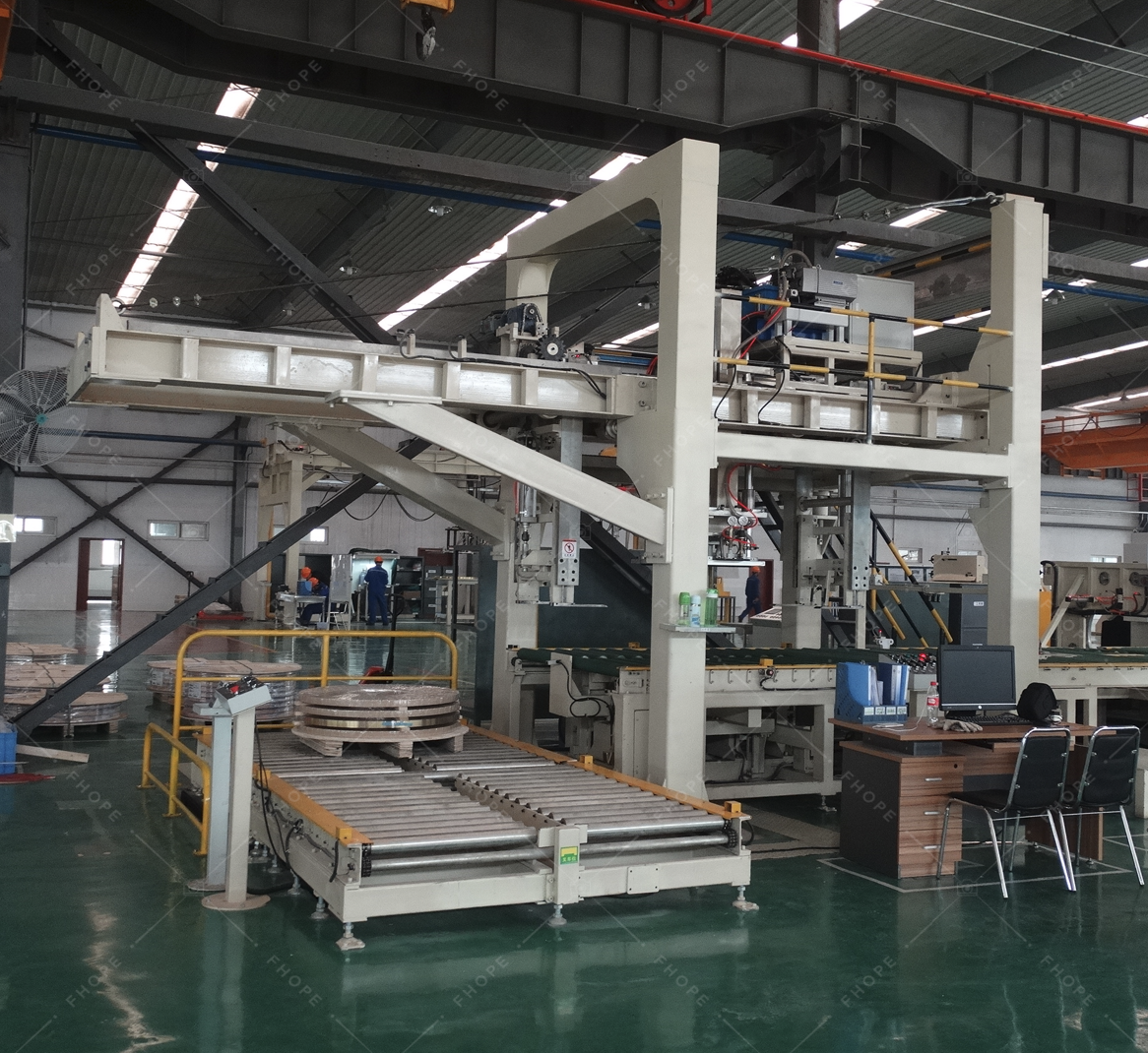
Steel Coil Packaging line
View Details →
Vertical coil packaging line
View Details →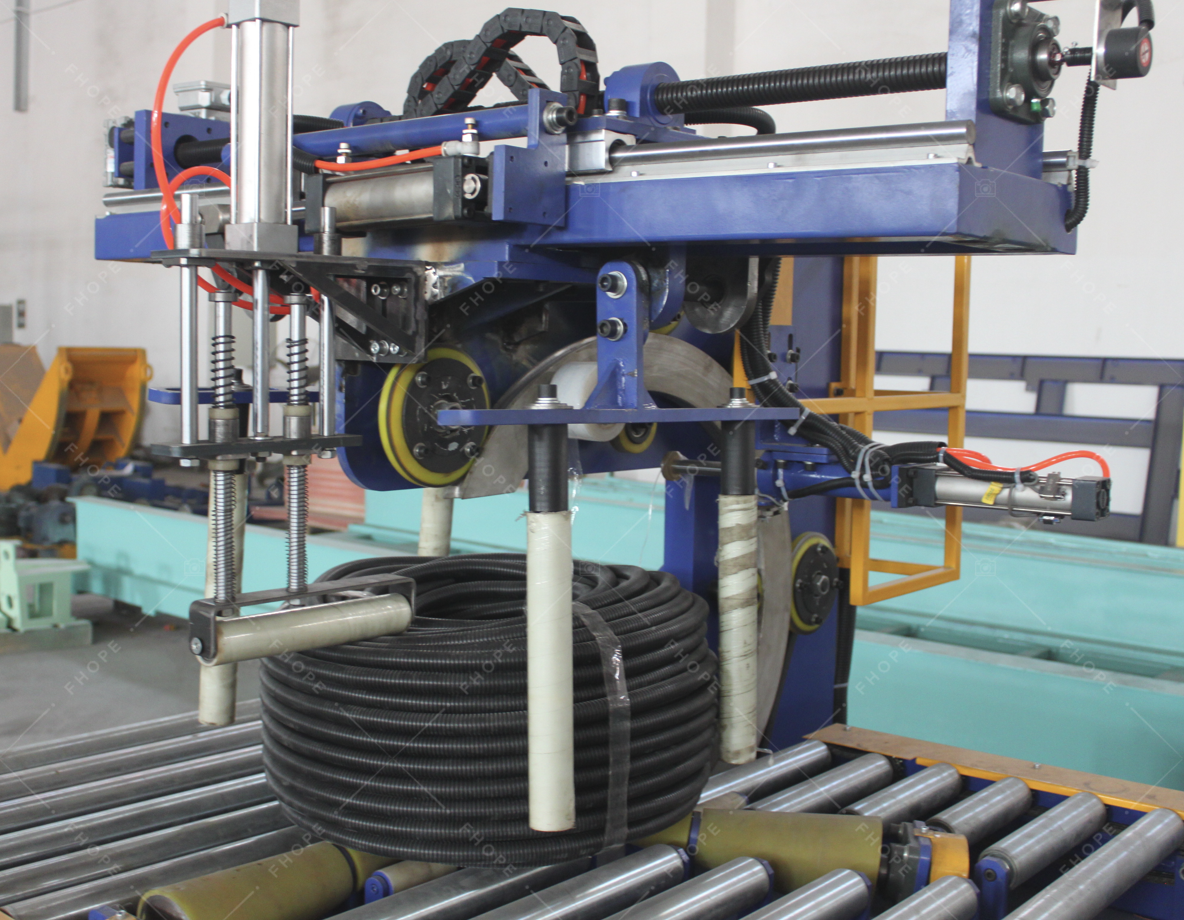
Hose Coil Packaging line
View Details →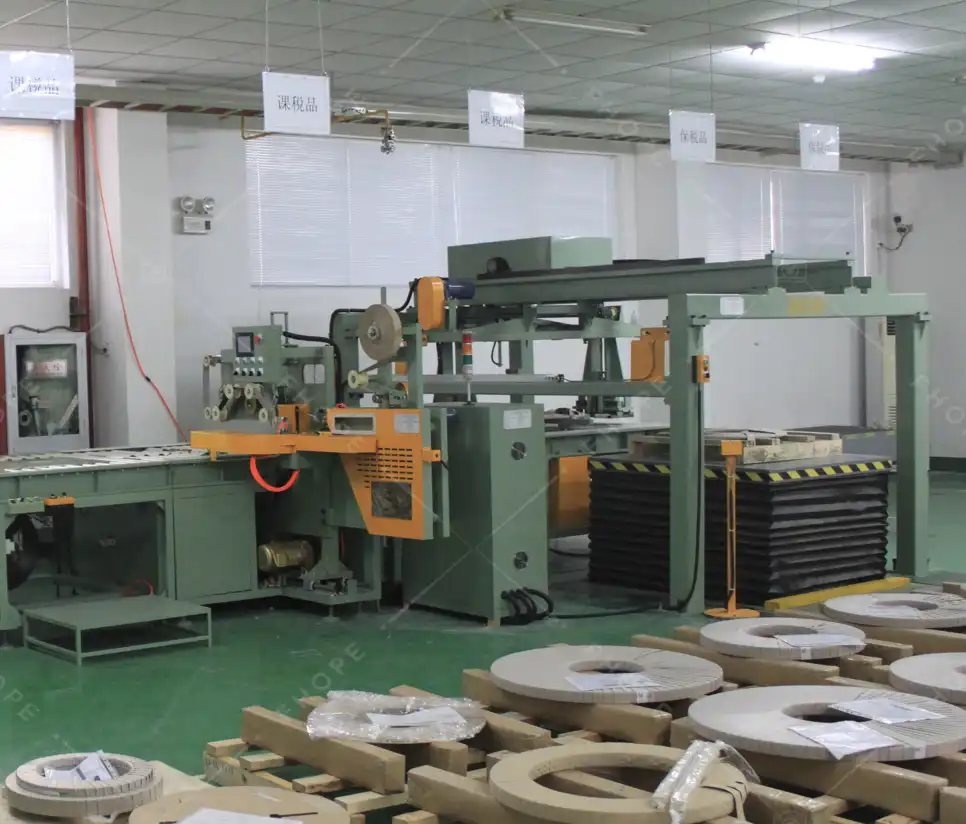
Copper Coil Packaging line
View Details →
Wire Coil Packaging line
View Details →
Panel Packaging line
View Details →
Pipe Bagging Machine
View Details →
Aluminum profile packing line
View Details →
FHOPE Automatic pipe tube bundling&strapping line
View Details →
Automatic pipe tube bundling & strapping line
View Details →
Automatic steel tube strapping machine
View Details →
FHOPE Automatic steel tube packing machine
View Details →
Automatic plastic Pipe strapping packing line
View Details →
Automatic PPR/PVC Pipe bagging line
View Details →
Platsic pipe bag packing machine
View Details →
Tyre Packing Machine FPT-200
View Details →
Tyre Packing Machine FPT-300
View Details →
Tyre Packing Machine FPT-400
View Details →
Cable Coil Packing Machine-FPCA100
View Details →